


History of the Howe Estate
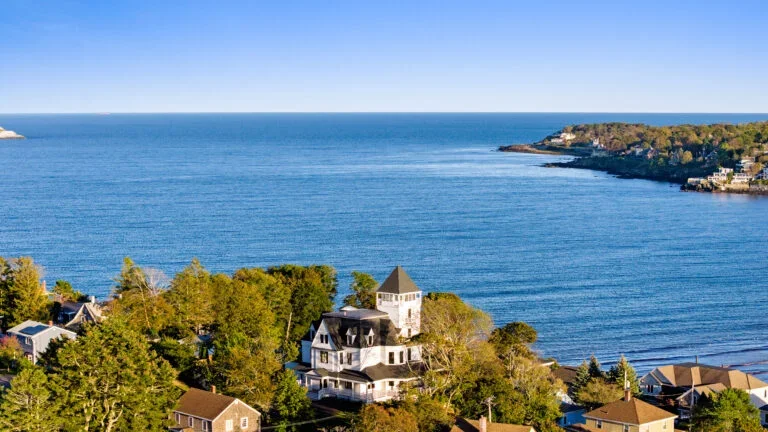
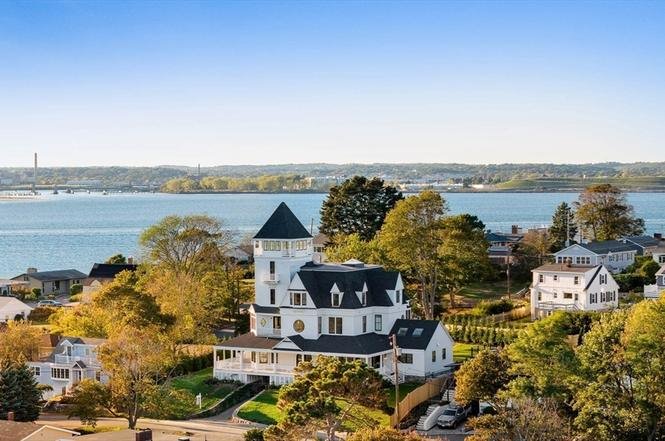
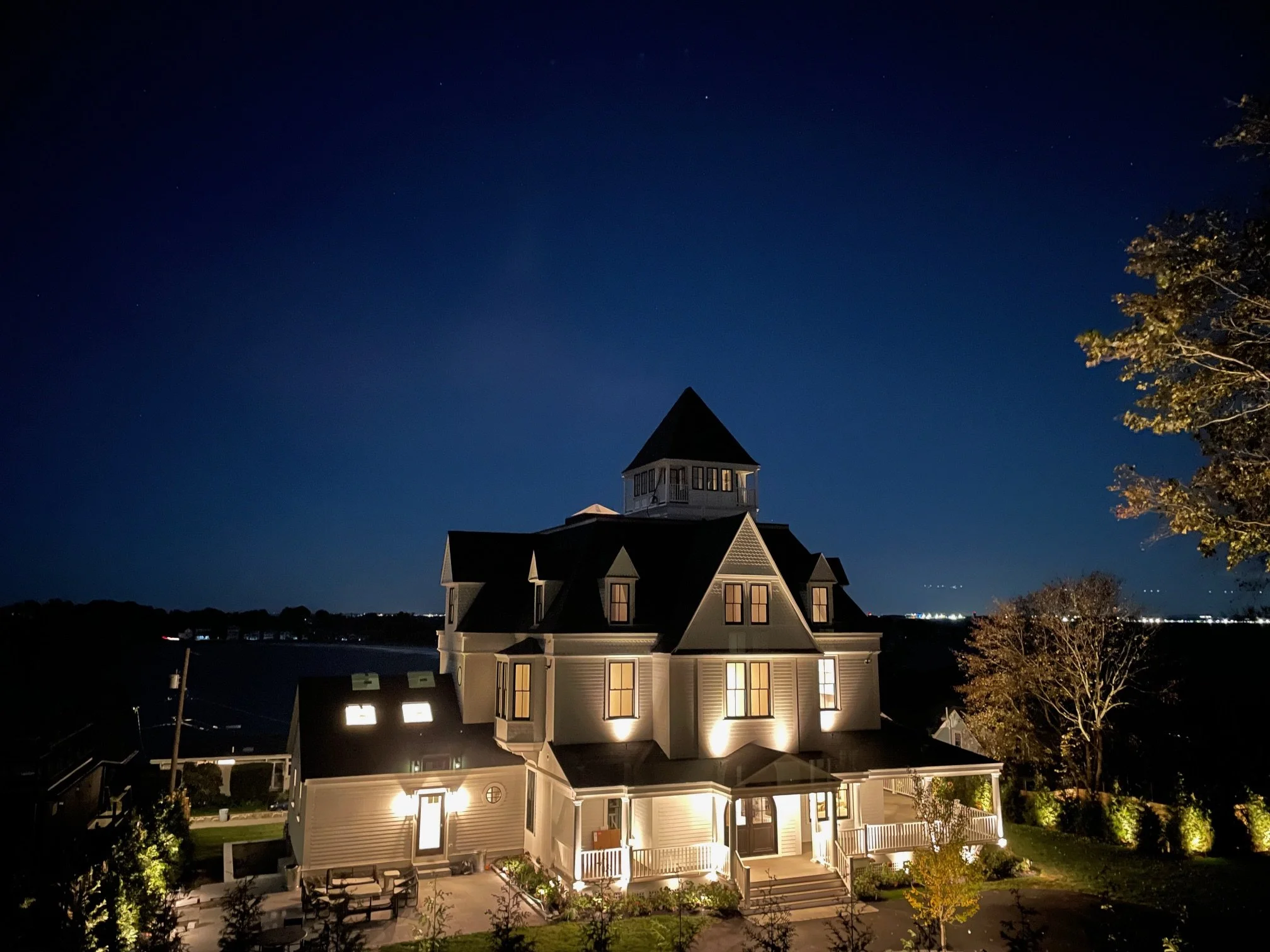
In 1880, Boston merchant Thomas Howe asked architectural firm Wait and Cutter, along with builder J.T. Wilson, to build him a ‘Gentleman’s Residence’ on a hilltop site in Little Nahant. Located at 9 Little Nahant Road, the Howe Estate is one of Nahants finest examples of Queen Anne style design.
The Restoration of The Howe Estate
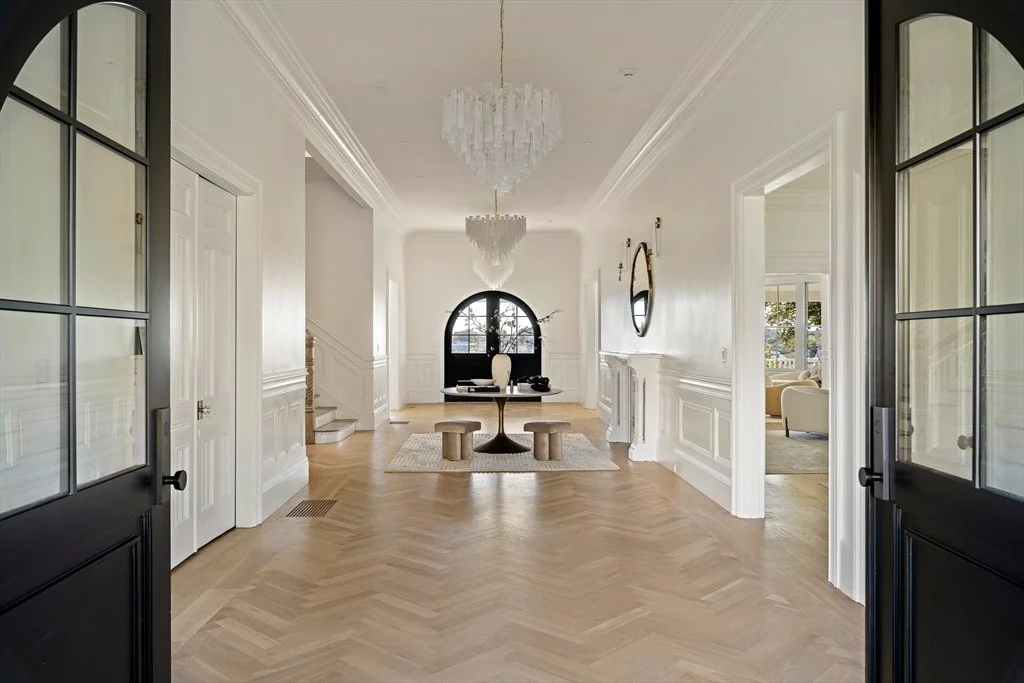
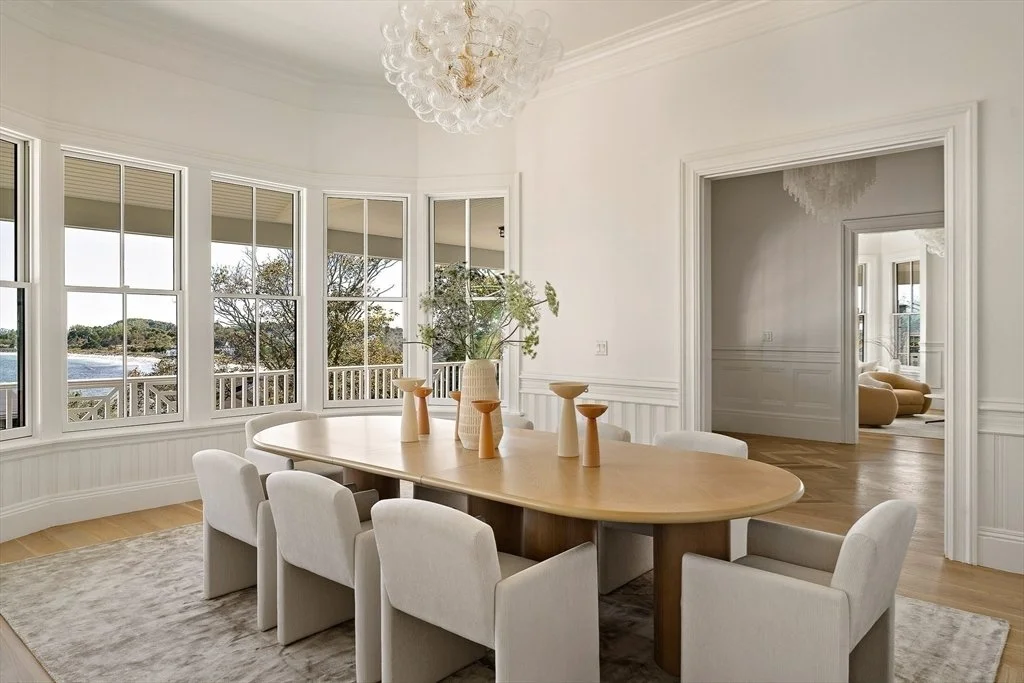
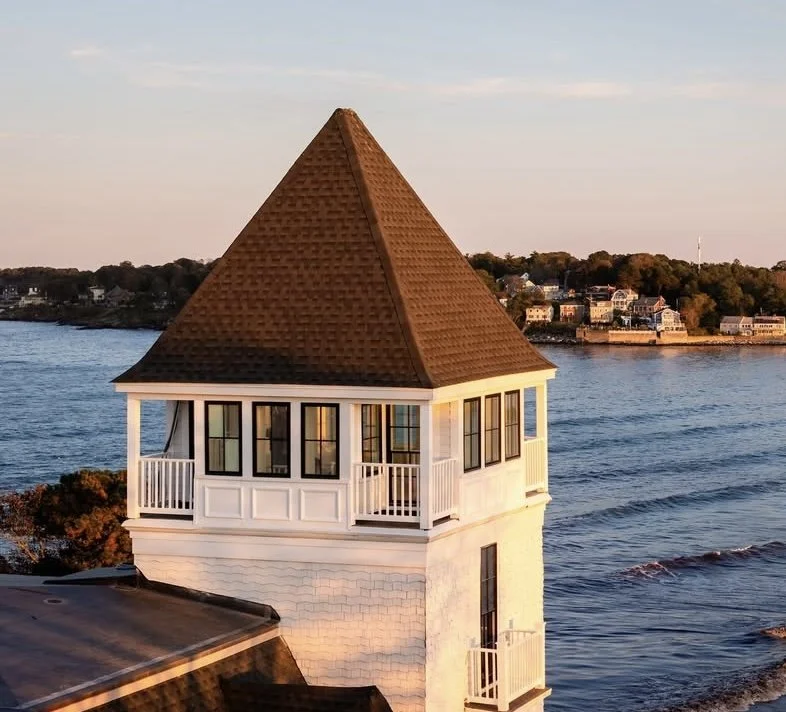
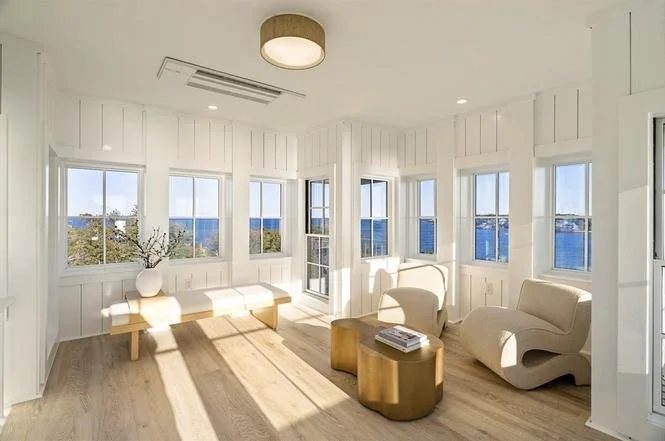
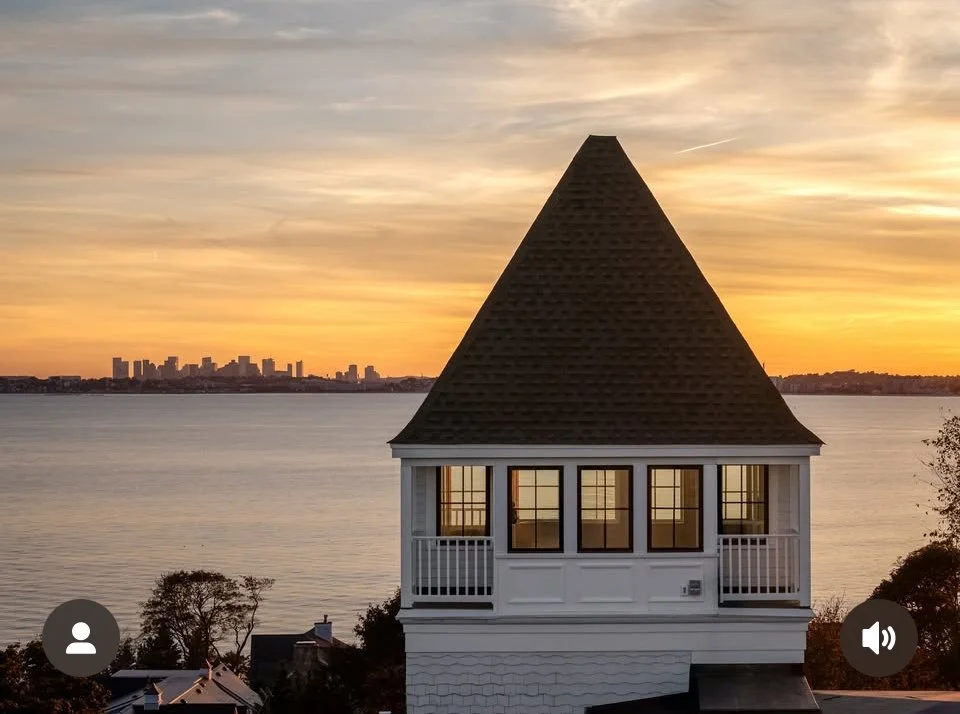
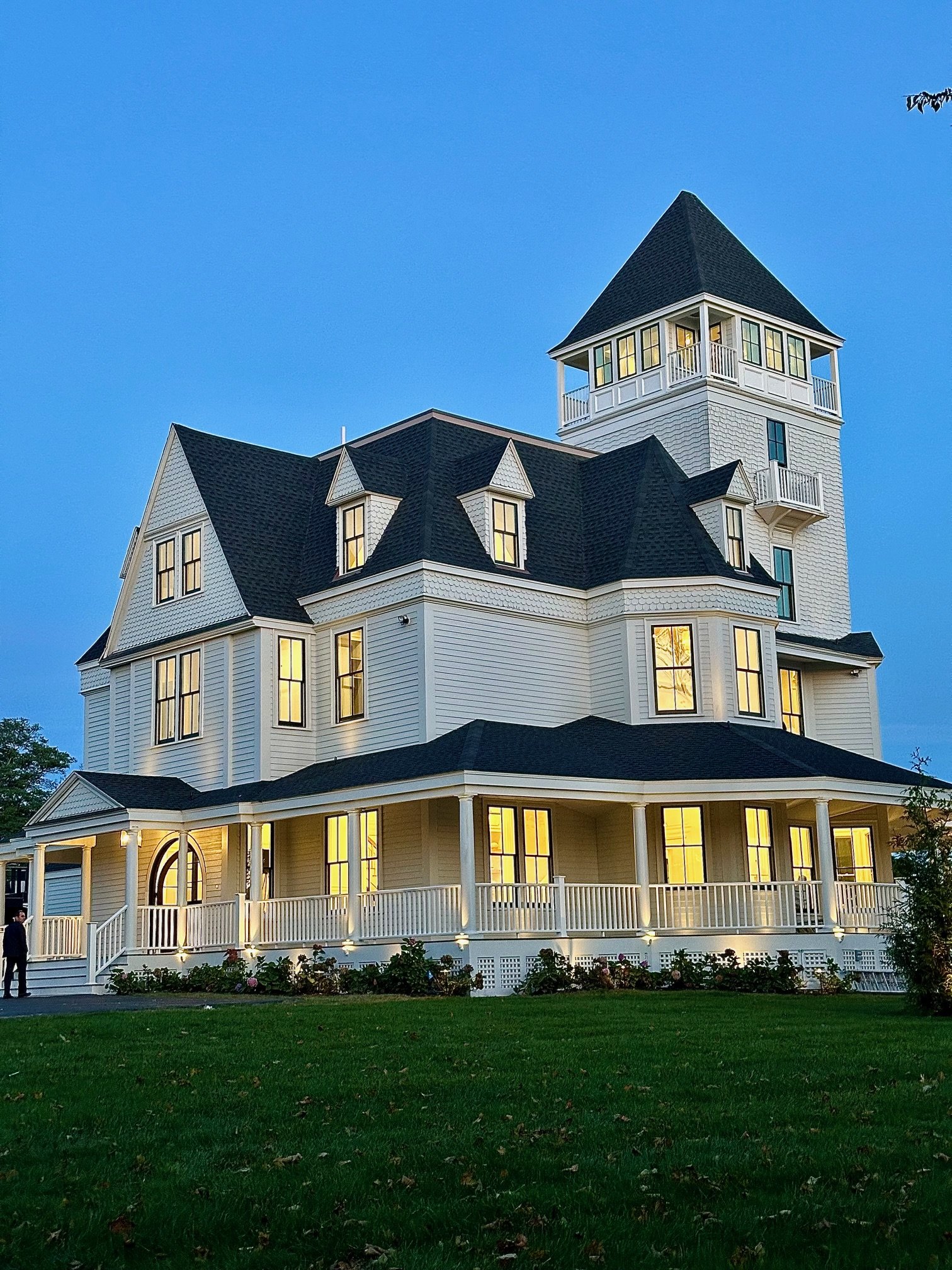
The Nahant Historical Society is excited to announce that the privately funded, multi-million dollar restoration of the Howe Mansion is now complete. Developer Ricky Beliveau graciously agreed to work with us to document the entire restoration.
Beginning in 2023, we followed along to witness the journey as this Little Nahant landmark, that has kept watch over Short Beach for over 140 years, was returned to its once former grandeur by Volnay Capital and Back Bay Design Corp.
The Little Nahant neighborhood is grateful the developer was committed to meticulously preserving this iconic and magnificent 1880 home, while also enhancing the charm of the surrounding neighborhood.



The Thomas Howe Estate is one of Nahant’s finest examples of Queen Anne style design.
In 1880, Boston merchant Thomas Howe asked the esteemed architectural firm Wait and Cutter, along with builder J.T. Wilson, to build him a ‘Gentleman’s Residence’ poised on a hilltop site in Little Nahant. The result was a mansion that possessed integrity of location, design, setting and workmanship. Today, the Howe Estate also possesses historical associations with Nahant’s development as a summer resort.

This drawing is the architect’s concept of the Thomas Howe Estate which was built on the crest of the promontory overlooking Short Beach.
Located at 9 Little Nahant Road, the house features a complex roofline and massing with steeply-pitched gable dormers, chimneys with corbeled caps, and a pyramidal-roofed square tower extending from the top of the mansard roof. A one story porch encircles the house, with a porch-cochere at the north elevation and a fretwork balustrade.
The Howe Estate Through the Years (1800’s/1900’s)
When Mr. Howe had this house constructed in 1880, it was one of only a handful of buildings on Little Nahant. The other two houses (located at 25 Baker Rd and 80 Little Nahant Rd) were owned by George Simmons. Until the turn of the century, Little Nahant was owned by these two men and remained undeveloped until several decades after their deaths.

The Howe Estate, 1930’s
When Thomas Howe died, the house was inherited by 4 of his children: Percival Howe, Louise Howe, Harriet Howe and Kate Howe Chamberlain. The sisters on occasion invited the school children of Nahant to come visit the home and observe the skies from a telescope located in the tower. Through wills and transfers, the Nahant house finally came entirely into Percival Howe’s possession and he resided there for a few summers.

View from Little Nahant Rd, 1952
In 1928, upon the death of Percival, his trustees sold the property to Charles Phillips, Bernard Carahar and Leon Delano (known as the Nahant Associates). The Howe Estate stood practically alone in its extensive grounds, dominating the easterly side of the sparsely populated Little Nahant until the property was subdivided by the Nahant Associates.
In 1931, the mansion was purchased by Pauline Peckham. During the ownership of the Peckham family, Christmas lights (a novelty of the time) outlined the building and brought viewers from miles around to see them.

View from Howe Road, 1952
Purchase history:
1928 Charles Phillips, Bernard Carahar, Leon Delano
1931 Pauline Peckham
1936 John Scanlan
1951 Anthony and Paolina Cola
1963 Constantine and Marianna Pezaris
2023 Ricky Beliveau
Recent History (2000’s)
January 18, 2022 The HUD Public Auction of 9 Little Nahant Rd is announced and filed with the Salem Registry of Deeds. Auction is Scheduled for February 15, 2022
January 25, 2022 Public Auction Notice appears in the Lynn Daily Item.
The Scheduled Auction is Canceled.
February 16, 2022 At the Nahant Board of Selectmen's Meeting, the Nahant Town Administrator says the Town has submitted a $1,100,000* Community Preservation Committee Article (taxpayer funds) to be voted on at the May 21, 2022 Nahant Annual Town Meeting to purchase the condemned property with no planned use for the property.
The Board of Selectmen explain in this meeting that if the condemned house on a less than one acre lot is purchased by the Town, the residents of Nahant will have to decide what to do with it: either to demolish the 1880 historic home or to appropriate millions more to renovate it.
*If purchased by the Town, none of the back taxes would have been collected, nor would any future property taxes be collected. Full Story: Nahant Battles Feds over Historic Home
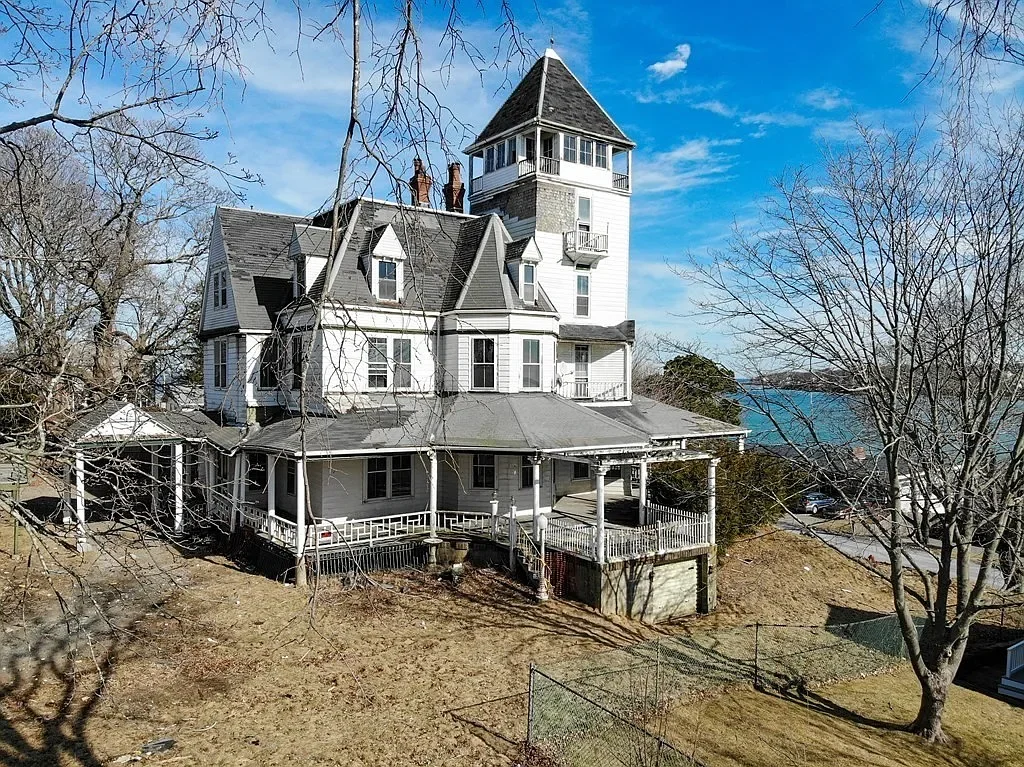
April 6, 2022 Upon hearing the town’s plans of possibly tearing down the historic home, the executor of the Pezaris estate lists 9 Little Nahant Road for sale. While it is not sold during this period, it is kept on the market past the Annual Town Meeting.
March 12, 2023 HUD once again lists the property for sale/auction.
June 14, 2023 Developer Ricky Beliveau purchases 9 Little Nahant Road for $1,100,000. A large portion of the back taxes owed to the Town of Nahant are paid off.

June 14, 2023 - Ricky Beliveau, with his son Aidan, on closing day purchasing the Howe Estate
““Great news that the handsome and historic mansion is to be restored.””
July 2023 The restoration, which takes a full 2 years, begins.
September 21, 2025 Developer Ricky Beliveau, in partnership with the Nahant Historical Society, gives a presentation at Nahant Town Hall open to all who want to learn about the 2 year long restoration process.
“Having talked to all the neighbors and the Historical Society, it really opened my eyes to how important this property is to the community,” Beliveau said. “There were a lot of concerns that it’d be knocked down… but it was really clear how important this was, and we’ve had great feedback from the community.”
October 1, 2025 Ricky Beliveau invites the Nahant community to an Open House at 9 Little Nahant Rd for a first peek at the stunning restoration of the 1880 Howe Mansion.


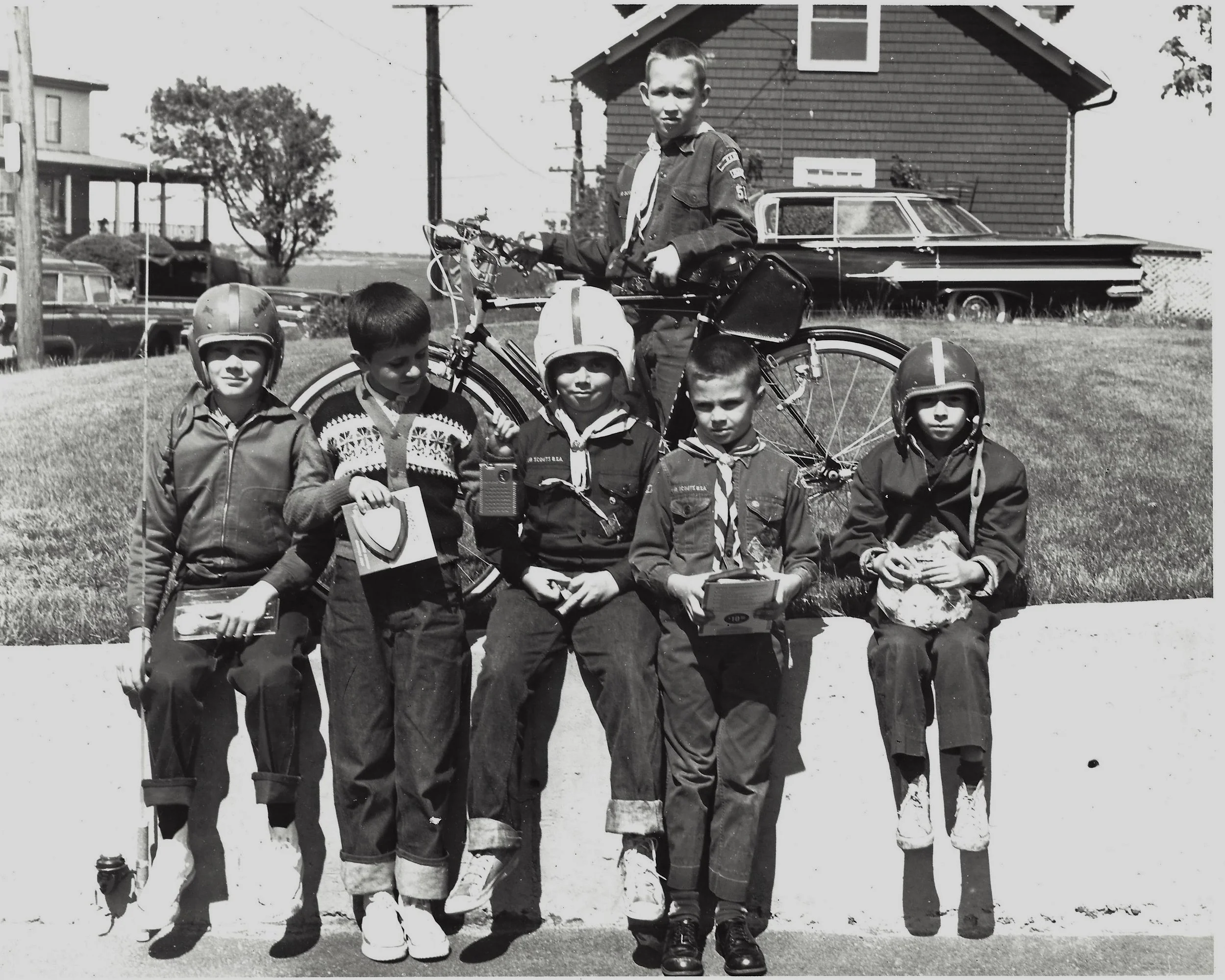
Nahant Soap Box Derby
“The Thrill on the Hill” was run in Nahant for many years on Memorial Day Weekend, primarily in Little Nahant
The first Soap Box Derby held in Nahant was in 1961. Leon Delano and Clayton Gates were part of the start-up committee. Leon had done his share of Soap Box Derby racing, placing second in the race held at Suffolk Downs in 1946.
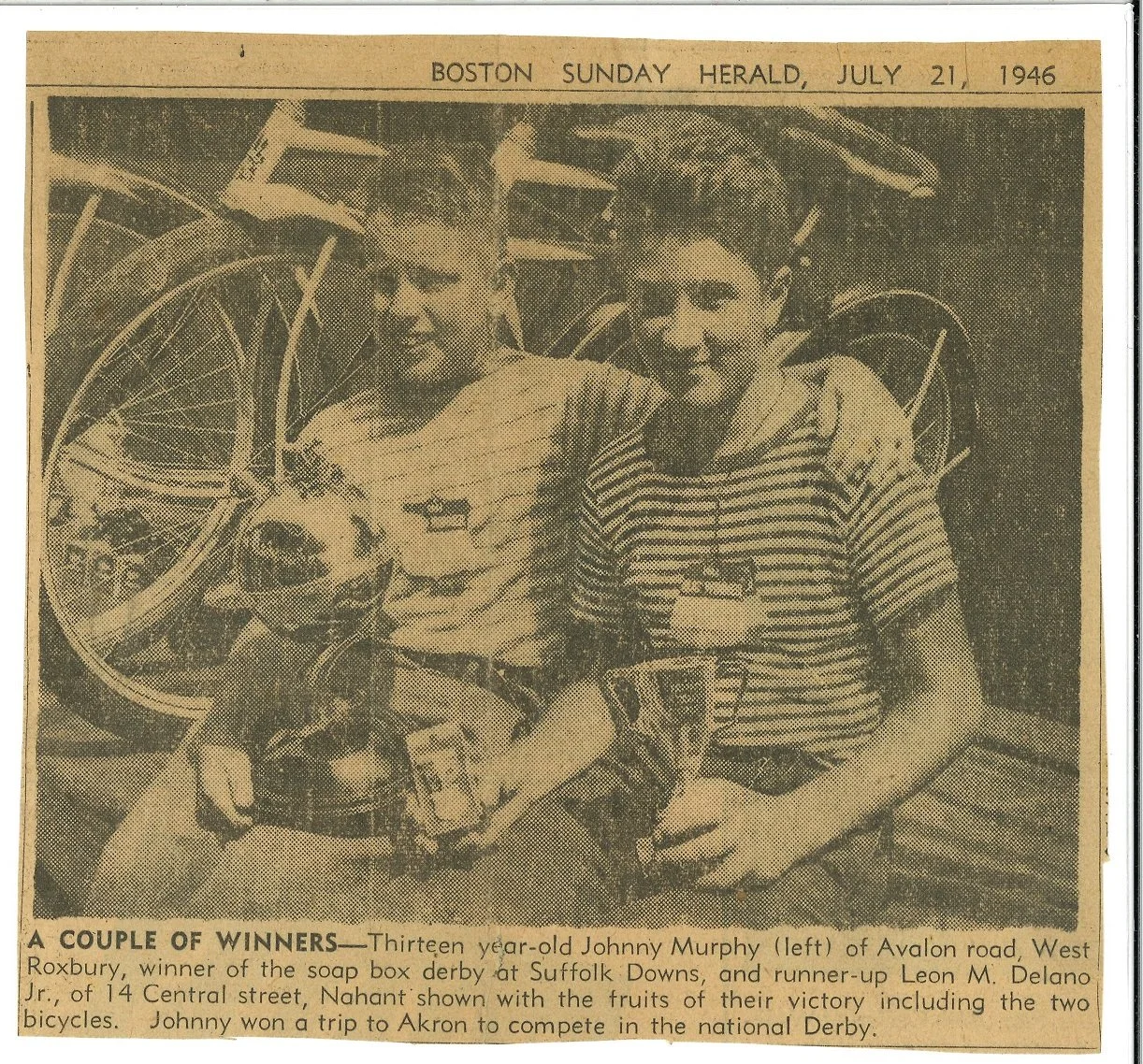
1946 - Leon Delano of Nahant, Revere Soap Box Derby Runner Up
The starting ramp was in front of the Cyr home at 86 Little Nahant Road. Young Jimmy Cyr was one of the race participants along with John Magro, Mark Dougherty, Skipper Lewis, and Sandy Croft – to name a few. (If you know the names of any other racers for that year, we’d love to hear from you.)
1961 - Jim Cyr
1961 - Winner Thomas McCarthy
1961 - Soap Box Derby contestants
“The Thrill on the Hill” was run in Nahant for many years on Memorial Day Weekend, primarily in Little Nahant (though there were a few years that the race took place on Nahant Road with the starting ramp at the top of the hill by Forty Steps Beach.) The Boy Scouts were typically the organizers of this event, though participation was open to all children in Nahant.
2005, 2006, 2007 T shirts can be purchased at our gift shop
2003 - Soap Box Derby Starting Line Little Nahant Road, Photo by Lisa Doyle
2007 - Girls participating in Derby, Little Nahant Road. Photo by Jonathon M. Whitmore, Lynn Item
History of National Soap Box Derby
The Soap Box Derby began in Ohio in 1933 when Myron E. Scott, a photographer for the Dayton Daily News, came upon a group of boys racing down a hill in homemade cars. Mr. Scott noticed that the cars were made from wooden soap crates and had four wheels, so he called their race a Soap Box Derby.
Mr. Scott talked his boss into sponsoring an organized series of soap box derbies through the summer of 1933 and into the next year. In 1934, 300 children participated watched by about 40,000 spectators. By 1935, the General Motors Chevrolet division agreed to sponsor an annual derby event. That is when the official race left Dayton and moved to Akron, much to the relief of the folks of Dayton. The following year a permanent track was built for the derbies.
Derby Downs was built in Akron in 1935 with the help of the Works Progression Administration (WPA), part of President Franklin D. Roosevelt’s NEW DEAL program established to help repair the economic destruction caused by the Great Depression. It’s remarkable to realize that the children’s races helped create jobs and brought a measure of happiness during these bleak years.
To this day, with the exception of four years during World War II and then again in 2019-2020 due to COVID – the race has taken place every year. The annual Derby is still run at Derby Downs in Akron, Ohio, but has become an international competition with girls and boys from all over the world participating. 1971 was the first year that included girls, and 1975 was the first year, of many, where a girl was the winner.
Car design
The racecars have strict guidelines as to how they are built and never have a motor.
Cars are no longer made from soap boxes. They have to be built to meet rule specifications, but still without motors. Design and construction of a Soap Box Derby car usually reflected the skills of the kid who built it, and as time passed each iteration with each new generation benefited from the previous on how a car would look. Before the introduction of kit cars in 1976, all cars were one-of-a-kind creations, some looking particularly unique in their experimentation with form and function. Like any evolutionary process, if innovations were successful at the track they were passed on to future designs.
Rule change highlights by year
1934 – Cost limit of $10 per car, excluding wheels, axles
1936 – Bicycle wheels prohibited
1937 – Only 12-inch (30 centimeter) solid rubber wheels permitted
1939 – Weight limit of car alone set at 150 pounds (68 kg)
1940 – Added weight not part of the car's construction prohibited
1947 – Use of graphite on car or on driver's person prohibited
1948 – Tiller steering and windscreens prohibited
1949 – Use of power tools to construct car prohibited
1950 – After much protest, power tool use permitted
1950 – Laminate construction and pre-1948 wheels banned
1950 – Removable cockpit seat backs required
1951 – After much protest, laminate car construction permitted
1953 – Vertical steering columns prohibited
1954 – Wheel tampering i.e. drilling, painting prohibited
1957 – No evidence of tire or bearing tampering being tolerated
1958 – $15 cost limit per car; wheel enclosures of any kind prohibited
1959 – Use of lead anywhere in vehicle prohibited
1961 – Driver's eyes must be above front cowling when racing
1962 – Use of aluminum and sheet metal prohibited
1963 – Ownership of top-nine cars at All-American passed to AASBD
1964 – Lay-back or lay-down cars permitted
1966 – $30 cost limit per car, excluding wheels, axles and steering
1968 – Cable turnbuckles must be outside of car
1971 – Girls permitted to race; needle-nose cars prohibited
1972 – Steering column above car body prohibited
1973 – Wheels must be calibrated
1976 – Windscreens on new Junior Division kits cars permitted
1977 – Windscreens on all racers prohibited
1992 – Stock kit racer made mandatory
1994 – Super Stock kit racer made mandatory
2000 – Masters kit racer made mandatory

Calantha Ruth Doane Sears
The Nahant Historical Society mourns the passing of our beloved Curator Emerita Calantha Ruth Doane Sears. A third generation Nahanter, she was 103, and known informally as “the First Lady of Nahant,” for countless reasons.
The Nahant Historical Society mourns the passing of our beloved Curator Emerita Calantha Ruth Doane Sears. A third generation Nahanter, she was 103, and known informally as “the First Lady of Nahant,” for countless reasons.
Calantha Sears inspired people to work as hard as she did for Nahant. While working to organize the town’s 1976 Bicentennial Parade, Sears, neighbor Irene Cullinan, and others founded the Nahant Historical Society, whose mission is “to acquire, preserve and interpret artifacts of Nahant, Massachusetts, illustrating its history, prehistory and that of people associated with it, for the enjoyment, education and enrichment of the public.”
Sears served as Children's Librarian at Nahant Public Library for 17 years. Because there was no library at the elementary school, she would deliver a selection of books for each class on a regular basis.
Additionally, Calantha served on the Town’s Historical Commission and the Greenlawn Cemetery Committee. She enjoyed being a member of the Nahant Village Church, and assisting in various community organizations, such as the Nahant Garden Club and Women’s Club, plus numerous others with husband Winthrop E. Sears.
Her life of service encouraged the creation of the Town’s annual Citizen of the Year Award which is given by the Town Moderator for outstanding service to our town. She was the first recipient so honored.
On May 7, 2023, Calantha enjoyed receiving the Boston Post Cane as Nahant’s oldest resident, surrounded by family, co-workers, and town officials. When Lynn Item reporter, Anthony Cammalleri, asked her “what advice she would give others, especially younger people,” Mrs. Sears replied: “I would like people to get along with each other and solve their problems peacefully without violence or cruelty.”
May Calantha’s shining example continue to inspire us all.
By Bonnie Ayers D’Orlando, Acting Interim President

War on Sea Won in Nahant Laboratory
The initial phase of construction of the Nahant Antisubmarine Laboratory was completed on April 7, 1914, one day after the United States declared war on Germany.
Prior to World War I, the general public, and many in the military, knew very little about submarines and submarine warfare. By war’s end, submarines were recognized as one of the most ‘frightening and loathsome’ instruments of war.
“ The Submarine Signal Company located its first laboratory at East Point, Nahant because of its strategic location and surrounding deep water.”
The Submarine Signal Company (SSC) was established in 1901 in Boston, MA, and was the first commercial enterprise organized to conduct underwater sound research and to develop equipment to be used for increasing safety of navigation. The initial product line included underwater bells for shore-based stations, buoys, and lightships, as well as encased microphones for sound detection on ships. The SSC located its first laboratory at East Point, Nahant because of its strategic location and surrounding deep water.
The Nahant Antisubmarine Laboratory (NAL) was built off Swallow Cave Road on the estates of General Charles J. Paine, Mrs. Knivet W. Sears, and Miss Clara Sears. (Property now owned by the Ralph Lowell family.)
“The Nahant Antisubmarine Laboratory (NAL) was built off Swallow Cave Road on the estates of General Charles J. Paine, Mrs. Knivet W. Sears, and Miss Clara Sears. (Property now owned by the Ralph Lowell family.) ”
The NAL consisted of 7 permanent, one-story wooden structures all connected by an elaborate plank walkway. There was also a standardized laboratory, or general use building. The initial phase of construction was completed on April 7, 1914, one day after the United States declared war on Germany. Sentinels were posted around the clock, and large signs warned that unauthorized personnel were not allowed on the premises
The SSC scientists’ first challenge at East Point was to identify underwater sounds by the type of vessel, then measure the distance at which they were first audible. Each class of vessels emits unique noises known as the ship’s ‘signature’. Previously, the SSC, and engineer Reginald Fessenden, developed the Fessenden Oscillator, which could receive and send underwater sounds. After much experimentation, a sensitive microphone, or hydrophone, was created. It could detect distant sounds more clearly than the Oscillator. (This ‘sensing’ technology was first developed to detect ice bergs.)
“If you check the plot plan from a 1914 atlas of Nahant, you will see the empty lot where this all happened. This lab was never included in the atlas. ”
In August, a prototype of this ‘sensing tube’, or hydrophone, was operational, always under combined Navy/Army security. A small building was added to the Tudor Wharf deck to facilitate loading the hydrophone onto a boat without public eyes spying. By late September, the design for this submarine detector was finished and ready for sea trials. It was tested by lowering it into the water from the side of a small boat. The tube was tested in all types of weather, day and night.
With the successful testing of this hydrophone, it became apparent that personnel would need to be trained to identify the sounds being received. Naval and civilian personnel were trained at the East Point facility. One of the first classes included American and British officers and enlisted personnel, plus a select group of French sailors. The training required endless hours listening to recordings of sounds emitted by sea craft of all types.
“A few of the original wooden structures were relocated to private properties in Town. At least two of these exist today as guest cottages.”
The hydrophone was developed not a moment too soon. German U-boats began appearing all along the U.S. east coast. The newly trained, and numerous, anti-submarine forces were put into action, some of them having been trained in Nahant.
In September of 1918, the Hydrophone School opened in New London, CT. Training in sound detection ended at Nahant. Shortly after the war ended, the electronics apparatus was removed from East Point, and the Nahant Anti-submarine Laboratory was quietly dismantled. Like it never existed.

Nahant the “Birthplace of American Tennis"
On July 14, 2024, Tennis lovers gathered in Nahant - the Birthplace of American Tennis - to celebrate the sport on it’s 150th anniversary
Tennis lovers gathered in Nahant to celebrate the sport on the 150th anniversary
BOSTON GLOBE - Nahant commemorated the 150th anniversary of the first lawn tennis game played in America, when James Dwight and Frederick Sears faced each other in August of 1874 on the lawn of Colonel William Appleton’s estate on the North Shore peninsula.
Nahant Tennis Club president Andrea Gogolos cut to the chase after grabbing the microphone outside the courts at Nahant Country Club on Sunday, addressing several dozen people prior to partaking in a doubles round-robin tournament.
“This is such an important day in our town’s history,” said Gogolos, beaming with pride as the sun radiated over her.
Participants wore attire that suited the style from a century and a half ago and used wooden racquets, hitting white tennis balls.
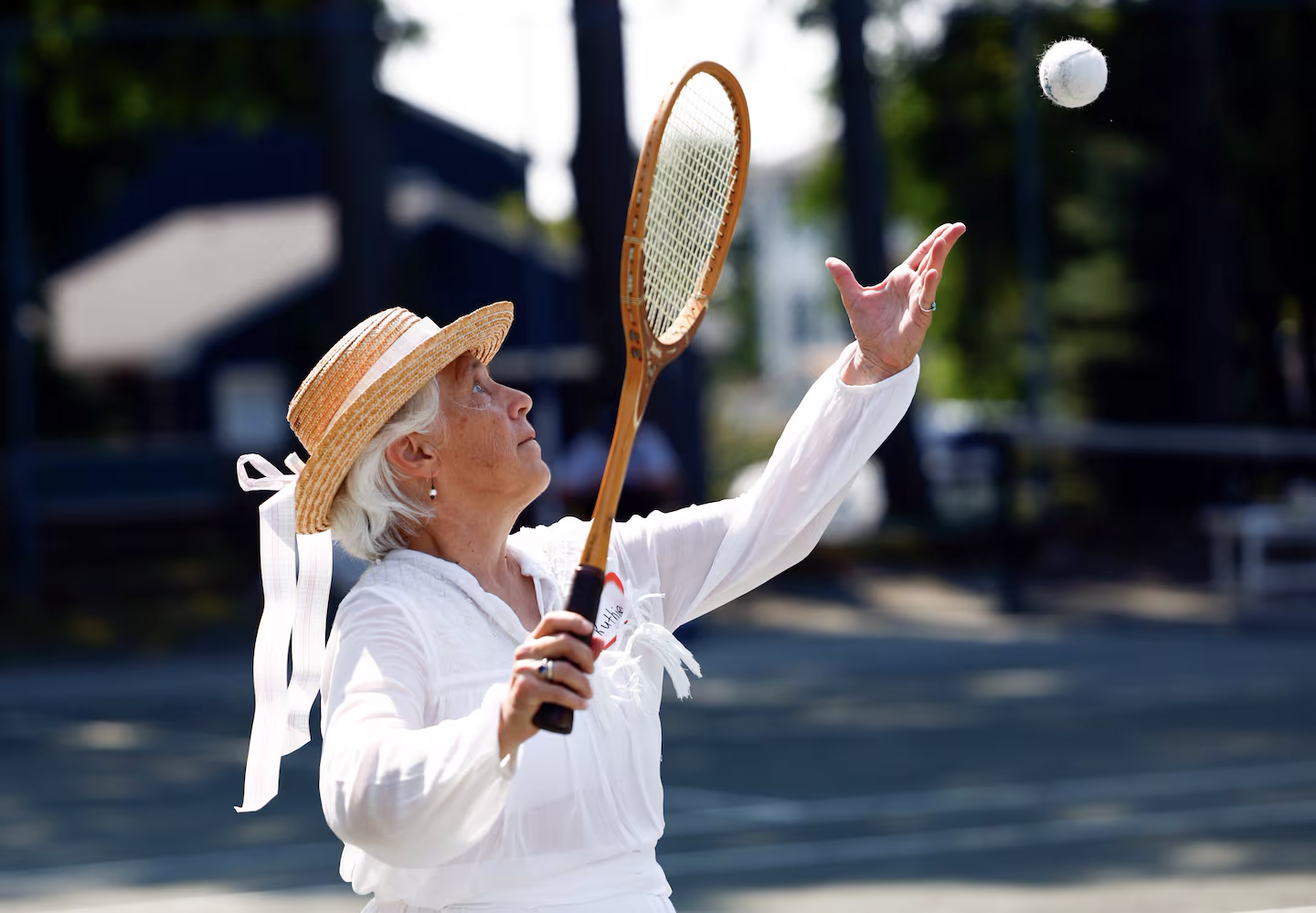
Ruthie Merrell of Nahant serves during the tournament honoring the 150th anniversary of the first tennis game in America Sunday at Nahant Country Club. DANIELLE PARHIZKARAN/GLOBE STAFF
In the festivities, several women partook adorning straw hats, the ribbons neatly wrapped around the base with flowers that immaculately remained in place. Many wooden racquets remained durable, with many people commenting that they hadn’t brought the outdated equipment out of the attic for years.
The aesthetics of the event took those in attendance back in time as an ode to the history of the sport in the coastal town.
“I thought about that moment and recreating it,” said Gogolos. “I was blown away when people started showing up in the costumes, the outfits that were appropriate back then and they are out there playing in them, with wooden racquets.

Andrea Gogolos, president of the Nahant Tennis Club, addresses attendees gathered to commemorate the 150th anniversary of the first tennis game in America Sunday at Nahant Country Club. DANIELLE PARHIZKARAN/GLOBE STAFF
“It’s beyond my expectations, the support and everything that’s happening. It’s about the history, what this moment meant. That here, this is where it all started.”
Gogolos, who played tennis at now-closed Marian High in Framingham before competing at Boston University, fell in love with the sport when she was gifted a wooden Wilson racquet at 10 years old.
“A phenomenon started here,” said Gogolos. “What we wanted to do today was honor the historic essence of what this is: the birthplace of tennis in Nahant.”
Gogolos played before looking around and smiling, the emotion of the moment plastered across her face. She described getting butterflies the night before hosting the ceremony, an exciting tingle of adrenaline that ran down her spine.
“I just love these moments,” said Gogolos. “I get choked up about it.”
Later in the afternoon, Dan Sears addressed the crowd about his great-grandfather, Richard Dudley Sears, known as Dick. Dick Sears, the younger brother of Frederick Sears, won the US Open in Newport in 1881, in addition to seven singles and six doubles championships at the US National Championships.

Sally Augustin of Nahant plays in old-fashioned tennis attire at a celebration of the 150th anniversary of the first tennis game in America on Sunday on the courts of Nahant Country Club. DANIELLE PARHIZKARAN/GLOBE STAFF
The International Tennis Hall of Fame brought several artifacts from their museum in Newport, R.I., including photographs of Dick Sears with family members, and relics from the early days of the sport.
“The history of the Sears family and the history of Nahant are now linked through tennis,” said Mary Livingston, a member of the 150th anniversary committee.
The Nahant selectmen constructed a resolution that commemorated the first game of tennis played in America, declaring Nahant as the “Birthplace of American Tennis.” Massachusetts Senate President Karen Spilka and Speaker of the House Ron Mariano commended the anniversary with a proclamation, which was unveiled at the ceremony.

This plaque marks the site of the first game of lawn tennis in America, on Swallow Cave road in Nahant. DANIELLE PARHIZKARAN/GLOBE STAFF
Former world top 10 player Tim Mayotte was on hand to discuss how tennis technique has changed throughout the eras of the sport. Mayotte adeptly broke down how advancements in court surfaces, equipment, and coaching have influenced tactics, and how strokes have been altered to maximize the effectiveness of the racquet, adding power and spin.
A native of Springfield, Mayotte won the 1981 NCAA singles title at Stanford. A former national coach for the United States Tennis Association, he reached the Wimbledon semifinals in 1982, the Australian Open semifinals in 1983, and won the silver medal at the 1988 Summer Olympics in Seoul, South Korea.
Mayotte jumped at the opportunity to be a part of the sesquicentennial ceremonies, imparting some of his wisdom as well as playing in an exhibition with local players.
“The longer you live, you realize that you’re just part of a big story,” said Mayotte. “To see the origin story and realize that you’re a small dot in the progression of this incredible sport, it just means so much. It’s obviously not just like any other sport in the sense that it’s so international.”

Boston Post Cane for Calantha
Nahant Historical Society co-founder, Calantha Sears, was all smiles as she entered the Society for the Boston Post Cane ceremony. The ceremonial cane is presented to Nahant's oldest resident, Sears being 101-and-a-half.
Lynn Daily Item, By Anthony Cammalleri, May 7, 2023
Nahant Historical Society co-founder Calantha Sears, 101, was honored with the Boston Post Cane — a traditional cane presented to a municipality’s oldest resident — Saturday morning at the Nahant Community Center.
A crowd of town officials and Sears’ friends and family roared in applause as Sears, with an unrelenting ear-to-ear smile, made her way into the room, stopping to chat one-on-one with her fellow Nahanters.
Calantha Sears is all smiles as she enters the Nahant Historical Society for the Boston Post Cane ceremony. The ceremonial cane is presented to Nahant's oldest resident, Sears being 101-and-a-half. (Spenser Hasak)
“She’s the heart and soul of this town,” said Cultural Council member Ken Turino.
The passing of the Boston Post Cane began in 1909 when The Boston Post Publisher Edwin Grozier delivered an ebony cane to Watertown with instructions that the city award the cane to its oldest resident. The Post went on to deliver more than 700 canes to municipalities across the Commonwealth.
As a historical society member, Sears was formerly in charge of presenting the cane to its former keepers — the most recent of whom was her late sister Lucy Doane, who died in 2010 at the age of 102.
When Town Moderator David Conlin presented the cane to Sears, he pointed out that she wrote the certificate he was reading.
“The award I’m about to read you — you wrote,” Conlin said. “This is a unique opportunity because this year, the cane is going out not just to Nahant’s oldest citizen, but Nahant’s most beloved citizen.”
When Sears accepted the cane, she temporarily put aside her walker and stood with it while she made a brief speech about the town she loves.
“As you get older, you get more appreciative of being in a community that is so caring to their older people. Besides my family, who are wonderful, the church and all the organizations in the town just take good care of all of us older people,” Sears said.
She added that while some folks fear receiving the cane, believing it to be a bad omen, she felt honored to receive it.
“Some people, when they were nominated for the Boston Post Cane, they were kind of negative about it and they said ‘this is the kiss of death.’ I look at it as the kiss of life,” she said.
Sears was born on Oct. 17, 1921, in the Hyland Road home her parents had built in 1916. She is a third-generation Nahanter whose grandfather, Albert Wilson, worked as a foreman and built many of the summer retreats and small houses in town.
After working with fellow Nahanter Irene Cullinan to organize the town’s 1976 Bicentennial Parade, Sears and Cullinan founded the Nahant Historical Society to preserve the town’s records and artifacts.
Sears also worked as a children’s librarian at the Nahant Public Library for 17 years. At the time, there was no library at the elementary school, so she would select 25 books for each classroom and deliver them to the children herself.
Cullinan, like many who attended Sears’ cane ceremony, described her as a talented and knowledgeable leader, and a kindhearted friend.
“I’ve never heard her say a bad word about anyone,” Cullinan said. “She’s always dedicated to her town. If someone came in and didn’t know something about Nahant, we’d always ask her.”
Sears said in her 101 years as a Nahant resident, she treasured the memory of her 90th birthday celebration the most. She said she was moved to see the community come together to celebrate her birthday, and she enjoyed taking a ride on the back of a motorcycle.
When asked if she had any wisdom to impart on those younger than her, Sears said she wanted people to resolve their differences and work together.
“I would like people to get along with each other and solve their problems peacefully without violence or cruelty,” Sears said. “I like peace, and I like it when people get along and work together instead of turning against each other.”

The Nahant Hotel, 1857
Ever wonder what a warm, summer day in Nahant would have been like in 1857?
From The Boston Sights and Strangers’ Guide R.L. Midgley, James Monroe & Company, 1857: “Stranger, if you would visit one of the most pleasant and delightful watering places in the world, seat yourself in the cars, be landed in Lynn, take passage in one of the stages that leave almost hourly, and when deposited in Nahant – take your Guide’s word for it – you will bless you stars, and thank him.”
Ever wonder what a warm, summer day in Nahant would have been like in 1857?
From The 1857 Boston Sights and Strangers’ Guide:
“Stranger, if you would visit one of the most pleasant and delightful watering places in the world, seat yourself in the cars, be landed in Lynn, take passage in one of the stages that leave almost hourly, and when deposited in Nahant – take your Guide’s word for it – you will bless you stars, and thank him…
Here, isolated from the noise, and heat, and bustle of the city, you may wander by the hour on the rocks, and watch the liquid chisel of the sea at its unwearied task upon the blue and slaty substance of the crags. Atom by atom they yield to muscular swing of the billows, worn and polished by their frothy edges – the toughest creation conquered by the softest, and the noise of this constant sculpture is the music of the world.
The rocks are torn into such varieties of form, and the beaches are so hard and smooth, that all the beauty of wave motion and the whole gamut of ocean eloquence are offered here to the eye and ear. All the loveliness and majesty of the ocean are displayed around the jagged and savage-browed cliffs of Nahant.

This narrow promontory, which runs out from Lynn Beach, is crowned with charming gardens, cottages, and villas, and rests like an emerald in its sparkling and fretted framework of brilliants. While the rocks present every variety of color, the cliffs are pierced by fissures, caverns, and grottoes so numerous that the visitor stands in awe; and the shell-crowned beaches of shining, silvery sand are so smooth and hard that they take no impress of the steed’s hoof or the rolling wheel.
Nearby is the Steamboat Wharf, where the trim Nelly Baker lies. It were impossible to describe all objects worthy of notice, but having named the most prominent, we will retire to the Nahant House. This is probably the largest hotel in America; the carpeted floors cover an area of nearly four acres; nine miles of wire are required to connect the balls with the annunciator; and the whole of this immense establishment is lighted with gas manufactured on the premises. Upon the first floor are the drawing rooms, reception parlors, offices, reading room, dining hall, and private dining parlors.
Sailing parties and chowder picnics are furnished with first class yachts, thoroughly manned. And when tired with the day’s sport, we return, sweet music from the Germania band soon drives dull care away, or we may seek enjoyment in the concerts, hops, and theatricals that follow each other in gay succession.
The Menu on August 28, 1856
After enjoying the sights and sounds of Nahant and retiring to The Nahant Hotel, you might want to avail yourself of the dining room services where, according to the menu, the following rules apply:
Gentlemen having friends to dine, will please give notice at the office. Meals sent to rooms will be charged extra. Children occupying seats at the table will be charged full price. Dinner for children and nurses from 1 – 1 ½. Breakfast from 6 ½ to 10 o’clock, Tea, 6 ½ to 9 o’clock, Supper, 9 to 12 o’clock.
Items on the dinner menu would include: Soup – Vermicelli or Fish Chowder; Fish – Boiled Codfish or Baked Haddock; Boiled – Turkey and Oysters or Leg Mutton with Caper Sauce; Cold dishes – Lobster, Ham, Tongue, Pressed Corned Beef; with side dishes – Boiled Rice, Currie of Lamb, Timbal of Macaroni, Chickens a la Tartare, Calf’s head with Turtle Sauce, Lobster Baked on Shell, and much more. You could order roasted Beef, Lamb, Ham. Turkey, Chickens, or Ducks followed by Bird’s Nest Pudding (Laura Ingalls Wilder’s recipe perhaps), Whortlebery and Custard Pies, Charlotte Russe, and Kisses Confectionary. For dessert you could have raisins, pecan nuts, almonds, apples, pears, watermelons, English walnuts, or orange ice cream.
To complement all of the above, the menu offers a plethora of wines – Madeira, Port, Burgundy, Champagne, Claret, Sauterne, as well as Brandy, Liqueurs, and Porter and Ales. I should think one would need help removing themselves from the dining room after all of this, or simply roll out the door. Fortunately, there would be much to enjoy during an evening stroll around the Hotel property on East Point as you gaze upon a sunset or the evening stars making their entrance in the night sky. Whatever your desire in the summers of the 1850s, Nahant was the place to be….and still is.

The Nahant Historical Society is a Blue Star Museum
The Nahant Historical Society is proud to announce that it will once again join museums nationwide in the Blue Star Museums initiative, a program that provides free admission to currently-serving U.S. military personnel and their families this summer. Admission to the Nahant Historical Society’s museum is already free to all, but as part of our Blue Star Museums involvement, we will offer all qualified military members a 10% discount in our shop, as well as $10 Membership in the Society.
The Nahant Historical Society is proud to announce that it will once again join museums nationwide in the Blue Star Museums initiative, a program that provides free admission to currently-serving U.S. military personnel and their families this summer. Admission to the Nahant Historical Society’s museum is already free to all, but as part of our Blue Star Museums involvement, we will offer all qualified military members a 10% discount in our shop, as well as $10 Membership in the Society. The 2022 program began on Armed Forces Day, Saturday, May 21, 2022, and will end on Labor Day, Monday, September 5, 2022.*
"Our military community looks forward to the Blue Star Museum program each year and I am excited to celebrate the 2022 season along with them.” said Kathy Roth-Douquet, CEO of Blue Star Families. “Thank you Nahant for participating in this impactful program and offering military families the opportunity to enjoy the arts with you this summer.”
Blue Star Museums is a partnership between the National Endowment for the Arts and Blue Star Families, in collaboration with the Department of Defense and museums across America.
“Museums educate and inspire, cause us to wonder and imagine, dream and remember,” said Dr. Maria Rosario Jackson, chair of the National Endowment for the Arts. “By participating in the Blue Star Museums program, the Nahant Historical Society is offering military personnel and their families an opportunity to feel connected to Nahant and other North Shore communities and to explore the world through the power of arts, culture and design, contributing to each person being able to live an artful life.”
Blue Star Museums include children’s museums, art, science, and history museums, zoos, gardens, lighthouses, and more, and hail from all 50 states, District of Columbia, and the U.S. Virgin Islands. The current list of participating museums will continue to develop over the summer as organizations are welcome to register to be a Blue Star Museum throughout the summer. Find the list of participating museums at www.arts.gov/bluestarmuseums
The Society is honored to be a part of this program. We are grateful to, and supportive of, all of our military men and woman who have served, and continue to serve, our country and community.
*Qualified members must show a Geneva Convention common access card (CAC), DD Form 1173 ID card (dependent ID), DD Form 1173-1 ID card or the Next Generation Uniformed Services (Real) ID card to receive their discount.

The First People of Nahant
Ever wonder who lived in Nahant during the 16th century and before?
THE NAHANT HISTORICAL SOCIETY WOULD LIKE TO ACKNOWLEDGE THE MASSACHUSETT TRIBE, THE TRIBE OF INDIGENOUS PEOPLE FROM WHOM THE COLONY, PROVINCE AND COMMONWEALTH HAVE TAKEN THEIR NAME. WE WOULD LIKE TO PAY OUR RESPECTS TO THE ANCESTRAL MASSACHUSETT TRIBE AND THEIR DESCENDANTS WHO STILL INHABIT HISTORICAL MASSACHUSETT TRIBE TERRITORIES TO THIS DAY.
Ever wonder who lived in Nahant during the 16th century and before? Humans migrated into New England as the last ice age ended about 10,000 years ago. By the 16th century, there were an estimated 100,000 people living in what is now Massachusetts. The Massachusett tribe lived in the Massachusetts Bay area, roughly north from present day Salem – Peabody and south to Weymouth - Brockton. Nahant’s First People raised their families in dome-shaped homes built of bark, and saplings, called wigwams or wetus. Primeval forests graced the land. “Bear Pond” was much larger than it is today. The tribe thrived by hunting, fishing, and, raising the “Three Sisters:” crops of beans, corn, and squash in Nahant. During the depths of winter, they sheltered inland in what is now Lynn. The Massachusett preserved their culture through storytelling, and played sports, such as the forerunner of modern lacrosse.
Sadly, European exploration, and colonization brought devastating changes to the Massachusett. First were European diseases, causing wide-spread death, as much as 90 percent, horribly worse than Covid19. Moreover, Native Americans practiced stewardship of their environment. But the colonists practiced damaging methods of farming, fishing, and hunting, which triggered negative environmental changes. The primeval forests were clear-cut causing wide-spread loss of habitat. This precipitated the loss of formerly abundant species, for example, the turkey, and the introduction of invasive species, both flora, and fauna, such as rats. The remaining First People struggled to survive as colonists took more and more control.
Watercolor by Dan deStefano
Do you know the 17th century story of Poquanum, the Sachem of Nahant, acting as a peacemaker between his people, and the Europeans? The Society has researched many sources to find out. Because so many of his tribe had lost their lives in the epidemics, Poquanum realized he had only two choices for his remaining people’s survival: wage war or make peace. He chose peace. Not understanding the difference between his own people’s world view and that of the colonists, Poquanum accepted small “gifts” and signed away land starting with Nahant in 1630. Poquanum’s time as peacemaker was ill-fated. He traveled north to present day Maine near Portland where trouble had erupted between Native Americans and colonists. The Abenaki, led by the Sagamore Scitterygusset, were suspected of the 1631 killing of a trader, Walter Bagnoll, who had defrauded them. Colonists wanted revenge. In 1633, Poquanum was tragically framed and lynched.
Today, according to the 2010 Federal Census, some 37,000 Native Americans live in Massachusetts. How can we all respectfully learn more about the Massachusett?
The Society recommends starting with the books and online resources listed below.
Study Resources of Native American History – online sources (Special note: the first three are written from the viewpoint of each 17th to early 20th century author’s perspective.)
Local – Nahant and Lynn (online sources)
Strobel, Christoph. Native Americans of New England, The Global Atlantic 1400–1900. 2015.
Lewis, Alonzo. The History of Lynn 1844 (2nd edition.) This Lynn historian, abolitionist, artist, poet, publisher and surveyor researched Poquanum’s life, family, and his murder. Lewis also discovered the Sachem’s real name by this 2nd edition. https://babel.hathitrust.org/cgi/pt?id=yale.39002015471577&view=1up&seq=9&skin=2021
Wilson, Fred A. Some Annals of Nahant. 1928. This author was not only a Nahant building contractor but also an author, historian, and genealogist who served as a volunteer in many town offices, not least as Nahant Public Library trustee. #1 - Some annals of Nahant, Massachusetts, by Fred A. Wilson. - Full View | HathiTrust Digital Library
Wood, William. New England’s Prospect: Being a true, lively, and experimental description of that part of America, commonly called New-England: discovering the state of that country, both as it stands to our new-come English planters; and to the old native inhabitants. And laying down that which may both enrich the knowledge of the mind-travelling reader, or benefit the future voyager. 1634. Wood came to New England in 1629 to report on the Massachusetts Bay area’s environment, and how settlement was progressing to sponsors in England. Many details about Native Americans plus a section on Nahant. https://gutenberg.org/ebooks/47082
O’ Brien, John L. Registrar, Southern Essex Registry of Deeds. Native American Deeds website, which documents the history of how the lands of Nahant, and other Essex municipalities came to be under colonial control. https://salemdeeds.com/NAD/default.aspx
Massachusetts and New England
Bragdon, Kathleen J. Native people of southern New England, 1500-1650.
Cronon, William. Changes in the Land: Indians, Colonists, and the Ecology of New England, 1983.
Lipman, Andrew. The Saltwater Frontier: Indians and the Contest for the American Coast. 2015
Newell, Margaret Ellen. Brethren by Nature: New England Indians, Colonists, and the Origins of American Slavery. 2015
Philbrick, Nathaniel. Mayflower: a Story of Courage, Community, and War. 2006
Schultz, Eric B. and Michael J. Tougias. King Philip's War: the History and Legacy of America's Forgotten Conflict. 2016
National
Brown, Dee. Bury My Heart at Wounded Knee, 1970
Dunbar-Ortiz, Roxanne. "All the Real Indians Died Off": And 20 Other Myths about Native Americans. 2016
Dunbar-Ortiz, Roxanne. An Indigenous Peoples' History of the United States. 2014
Reséndez, André. The Other Slavery: The Uncovered Story of Indian Enslavement in America. 2016.

Happy 100th Birthday Calantha Sears
This Sunday, October 17, 2021, we have the honor of celebrating Calantha’s 100th birthday. While we would have enjoyed a huge parade, town wide parties, and fireworks, it is with great pleasure that we honor Calantha in her own style – quiet, humble, and welcoming. Enjoy this special video message from Calantha.
October 17, 1921 -- or ten decades ago -- or five score ago -- or one century ago, Calantha Jane Doane Sears was born at her home in Nahant, with the family dog sleeping under the bed. Had the good people of Nahant known then what an incredible occasion this truly was there would have been ringing bells and celebrating in all neighborhoods.
This Sunday, October 17, 2021, we have the honor of celebrating Calantha’s 100th birthday at the Nahant Historical Society in the Community Center at 41 Valley Road. While we would have enjoyed a huge parade, town wide parties, and fireworks, it is with great pleasure that we honor Calantha in her own style – quiet, humble, and welcoming. Here is a special message from Calantha:
Please join us this Sunday, Oct 17th, between 1:00 pm and 4:00 pm for an open house style celebration. Calantha will not be present, as she will be celebrating with family. However, you can stop by on Sunday to record a birthday wish for Calantha and enjoy a birthday cupcake made by Roz. We are happy to deliver birthday cards -- just drop them off at the Historical Society.
If you wish to honor her with a gift, you might consider donating to the Friends of the Nahant Public Library or the Nahant Historical Society, two town organizations near and dear to her. Please continue to visit our public libraries and historical organizations and museums. These institutions continue to be the repositories of our unique histories and they preserve our stories and share them, “so that the future may know the past” – one of Calantha’s dearest wishes.
Remembering the Valiant: A Community Launches a Dream
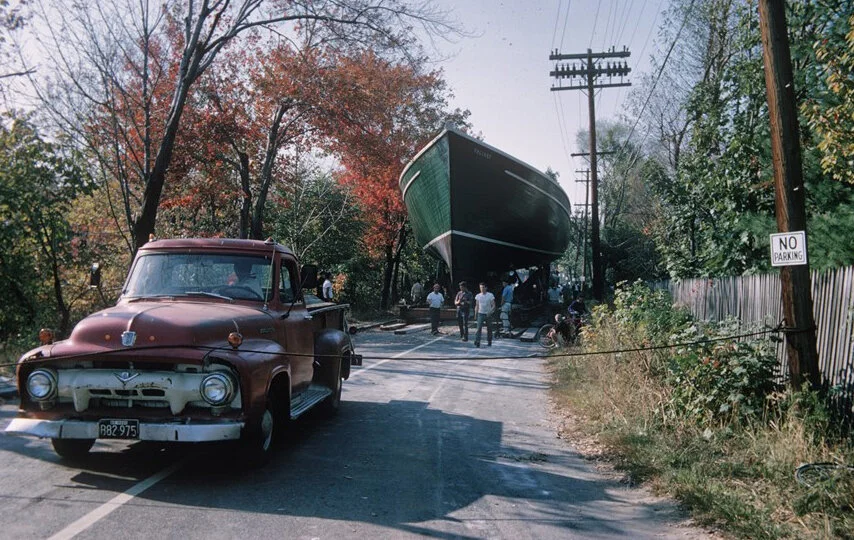
This is the story of the backyard construction of the Valiant, an 80 foot, 90 ton dragger, and how the community helped to make that dream come true. This professional offshore fishing vessel built in Nahant, Massachusetts, was constructed between 1955 and 1963 by owners and neighbors Raymond Palombo and Francis "Swede" L. McClain, Jr. in the narrow space between their houses with their partner Charles Baxter.
This project was funded in part by Mass Humanities, which receives support from the Massachusetts Cultural Council and is an affiliate of the National Endowment for the Humanities. Click here to download The Valiant Research Inventory - a summary of artifacts and study aid for research of a maritime episode in the history of Nahant, Massachusetts. Authorization in writing from the Nahant Historical Society is required for any other purpose.
This is the story of the backyard construction of the Valiant, an 80 foot, 90 ton dragger, and how the community helped to make that dream come true. This professional offshore fishing vessel built in Nahant, Massachusetts, was constructed between 1955 and 1963 by owners and neighbors Raymond Palombo and Francis "Swede" L. McClain, Jr. in the narrow space between their houses with their partner Charles Baxter.
Ray Palombo was born in Nahant. He was descended from a long line of seafarers. His father was a Nahant fisherman for years, having emigrated from Italy when he was about 20. Ray’s paternal grandfather owned merchant sailing vessels in Italy and his maternal grandfather was an Italian Naval Sea Captain. Ray was born to be on the sea, but to also build with his hands. He loved wood. When asked by his nephew, Warren, why he preferred wood instead of steel-hulled lobster boats, Ray replied that he ‘could hear what the boat was saying to him’. As a child, he spent hours at the library reading books on boat building. Prior to the Valiant, Ray built four other lobster boats: Cactus 26’, Carmen 32’, a 26 footer for Al Badger, and RayMena at 40 feet. These first boats were diminutive in size and story next to his dream boat, Valiant.
Frank ‘Swede” McClain was also born in Nahant and was around boats all of his life. Swede was an oil tank technician by trade, but loved being on the water. He served in the USCG during WWII, being stationed mostly in Nahant. Over the years, Ray and Swede developed a friendship, and Swede started working on Ray’s boats. This friendship blossomed into a partnership between the two, along with Charlie Baxter.
Charlie was an iron worker by trade, but was known for his carpentry skills. He was also a celestial sailor, meaning that he could navigate by the stars. With the combined talents of these men, the dream of the Valiant was brought to life.
The plans were drawn up. A backyard boatyard was created.
A veritable tower of oak was delivered and divided between the two families yards. The keel was laid in March of 1957. The knee, stem and slots for the ribs were all hand hewn. The timbers for the ribs were made ‘pliable’ by placing them in the steamer until Ray or Swede said they were ‘done’. Once determined to be ‘done’, the ribs were muscled into the keel notches using hand tools only, bent into profile – sometimes with the help of younger volunteers jumping on them to cause a slow bending.
This painstaking labor went on for six long years. Ray, Swede and Charlie Baxter continued to work their regular jobs, working on the Valiant whenever they could; after a long day of hauling traps or servicing home heating systems. There was not much time for relaxation. When Lee McClain saw a picture of his father sitting down, he was shocked. “My father never stopped,” he said. Then he remembered that one of the long planks fell on his father’s foot, breaking it.
The engine.
Ray heard about the wreck of the fishing vessel, St. Joseph, on the rocks of Milk Island off of Gloucester. The owner decided it was not worth the risk to recover and the insurance company would not be responsible for any harm to anyone doing the recovery. So, it was up for grabs and Ray and Swede were in. The locals took bets that it could not be done. It was December and the temp was 10 degrees. Ray, Swede and a couple others made their way to Milk Island. They dismantled the engine, saving what they could, loaded the parts into dorys and brought them back. The sea was rough and Swede was tossed out of the boat and swam to shore. The parts were then transported to the Hodge’s barn where the engine was assembled over time.
This is where people like Fred Gove came in with his mechanical expertise. Fred was put to work making all the parts go together and function properly. Fred’s brother, Ron, was also instrumental in getting the job done. He would haul 400 pots with Ray every day and then put in several hours on Valiant.
They tried to salvage the winch, but it was not possible. They built the winch using steel ordered from Hawkridge Steel and using the ACE Welding shop. At this time, ACE – which had done big business during WWII, was now closed, locked up by the government. Well, that didn’t stop the Valiant folk. In the dark of night, they would be let in by the owners, the Saco brothers, and there they used the ACE machinery to fashion a new winch.
The six years of building were over, and Valiant was ready to head to the sea.
The first thing needed for the move would be a steel frame. E.H. Hinds Riggers of Watertown was called in for the job. Ray had a connection with the owners and once again free labor was offered. When the steel was delivered, the village came to watch. Hinds brought a small group of welders, who were joined by others, such as George Nicoli of ACE Welding of Saugus, who also worked for free.
Valiant was built bow in to a small slope, so she would have to be towed stern first out through the McClain’s back yard. Along with the bulldozer that was being used, E.H. Hinds had two trucks. Steel cables were attached to these trucks and then to the cradle. Those engines were working overtime.
Day Two: Down Walton Road
Walton was a dirt road with ruts, basically one and a half car widths wide. Wooden planks were laid down on the road surface, like train tracks, to line up with the base of the cradle. Large wooden rollers, about the diameter of a telephone pole and 4 to 5 feet long, were then placed between the cradle and the planks. With the two trucks providing the propulsion, Valiant would ‘roll’ over the planks. As Valiant made her slow and steady way, these rollers and planks were constantly being moved by man power along the road, moving them from behind the boat, the bow end, to the front, or the stern end. This was a human powered conveyer belt. Several young, and not so young, men took off from work or school to do this job.
Ron Gove came home on leave from the service to be there. Some of the others were: Tom Gallery, Donny Hodge, Steve Robinson, Alan Sanborn, Jack Hatfield, David Flynn and Ray’s oldest son, Raymie. Don Huston and Charlie Baxter, whose sons Frank and Charles went on to work on the Valiant, were a part of this conveyor. All of this work was volunteer. It’s been said that our town doctor, Joe DiClerico, passed his hat along the move route collecting donations to help defray any costs associated with the Valiant. This was a community event.
Valiant made her slow way along Wharf Street, ending the day just past Desmond Drive. Some folks had their electricity shut off as wires had to be moved out of the way. Utility workers had to climb the poles along the way, disconnect the power and then reconnect after the boat moved by.

Day Three: To the Wharf
Valiant slowly made her way to Marjoram Park, with good wishes coming from the Rockledge on the way. The trucks pulled her as far as they could, right up to the beach corner of the park. Now it was up to the bulldozer to push her to the water’s edge. The plank and roller system continued on to the beach and into the water. Valiant’s move was timed for the low tide.
Everyone jostled in the crowd in an attempt to get the best spot. Before Valiant reached the water, Ray climbed a ladder onto her bow and attached the American flag.
A rope was attached to the bow and a bottle of champagne was tied to the end. She was then christened by his daughter Almena. Almena took the bottle in her white-gloved hands and gave it a good whack. Sandra (Macarelli) Kile was 10 years old the day the Valiant launched: “I remember it being a time of great pride in America as we all went over to the wharf with our flags in hand. We had our native son President John F Kennedy in office, the space program was launched, and in Nahant, Almena, my friend and classmate, was the luckiest girl alive to be christening her father’s boat!”
Almena Palombo
Former Selectman and Town Historian, Charles Gallery, fired a volley of 12 salutes from his 10 gauge cannon as the boat was christened. The Reverend Swansburg offered a blessing, and Valiant was now ready for the final nudge. The bulldozer brought her as far as possible with the low tide. The rest was up to the incoming tide.
There were news reporters, photographers and even The White House sent an emissary to be a part of this event. Benjamin Atwood Smith, II, former Mayor of Gloucester, former Harvard roommate of JFK, was sent to the launch by the President. A news clipping captures the essence of the ‘breaking free’ of Valiant. “Hundreds of people milled around Marjoram Park until nightfall to watch the progress of the dragger into the water. At dusk, weary men, soaked to their waists finally left it to await the incoming tide."
Others began to crowd into Marjoram Park and onto the wharf at 10 pm. to watch the dragger being lifted off its cradle at high tide. Flood lights from the Swampscott Civil Defense Unit directed beams on the boat. Boats including that of the Explorer Scouts, nudged the Valiant and at 10:45 pm, she slipped smoothly out of the cradle. Sirens, horns, cheers and applause rang out. A few days later, Valiant was towed to Gloucester to be outfitted and made ready for fishing. (Some of the financing came from a bank in Gloucester with the stipulation that Valiant fish out of Gloucester.) Valiant came proudly back to the wharf in Nahant after being fully outfitted and ready for the open sea.
In June of 1967, the Valiant went down in waters about 70 miles off Nantucket. All five crew members, Ray Palombo, Richard Halverson, Joel Izzo, George White and Edward Sullivan evacuated to the dory and were picked up by a nearby fishing vessel, the San Andrea. All that was left of the Valiant were the oars that went with Ron Gove’s dory, which was swamped during the rescue.

Milo
Milo was a Newfoundland/St Bernard mix who moved to Egg Rock Lighthouse with the first keeper, George B Taylor, and his family in 1855. Often he swam the mile wide channel back to Nahant to visit and carouse with the mainland dogs. Milo achieved international fame and admiration when he rescued one of the Taylor children from drowning. After word of Milo's heroic act spread across the Atlantic Ocean, Sir Edwin Henry Landseer painted Milo’s portrait depicting a small child nestled between the noble animal's enormous paws in "Saved".
Milo was a Newfoundland/St Bernard mix who moved to Egg Rock Lighthouse with the first keeper, George B Taylor, and his family in 1855. In foggy weather Milo served as a kind of fog signal, barking at vessels as they approached Egg Rock. Taylor claimed his dog was as useful as the light.
The Taylor family with Milo on Egg Rock
Often he swam the mile wide channel back to Nahant to visit and carouse with the mainland dogs. On one occasion keeper Taylor saw Milo dive into the sea after a duck and swim out of sight. When Milo didn't return by sundown the family feared he had drowned. The next afternoon, a weary Milo was seen swimming toward Egg Rock. The ecstatic children launched a boat when they saw Milo, rowed out to meet him and nearly capsized when they pulled the giant dog into the boat.
Milo achieved international fame and admiration when he rescued one of the Taylor children from drowning. After word of Milo's heroic act spread across the Atlantic Ocean, Sir Edwin Henry Landseer painted Milo’s portrait depicting a small child nestled between the noble animal's enormous paws.
Many know Sir Edwin Henry Landseer as the sculptor of the four magnificent bronze lions in Trafalgar Square, London. However, he was also Britain's foremost animal painter - Queen Victoria selected him to paint her pets over the years. So popular and influential were Landseer's paintings of dogs that the name "Landseer" came to be the official name for a variety of Newfoundland dog. It was this variety that Landseer popularised in his paintings celebrating Newfoundlands as water rescue dogs, most notably Milo in "Saved" (1856).
“Saved”, by Edwin Henry Landseer
The Founding of the Historical Society
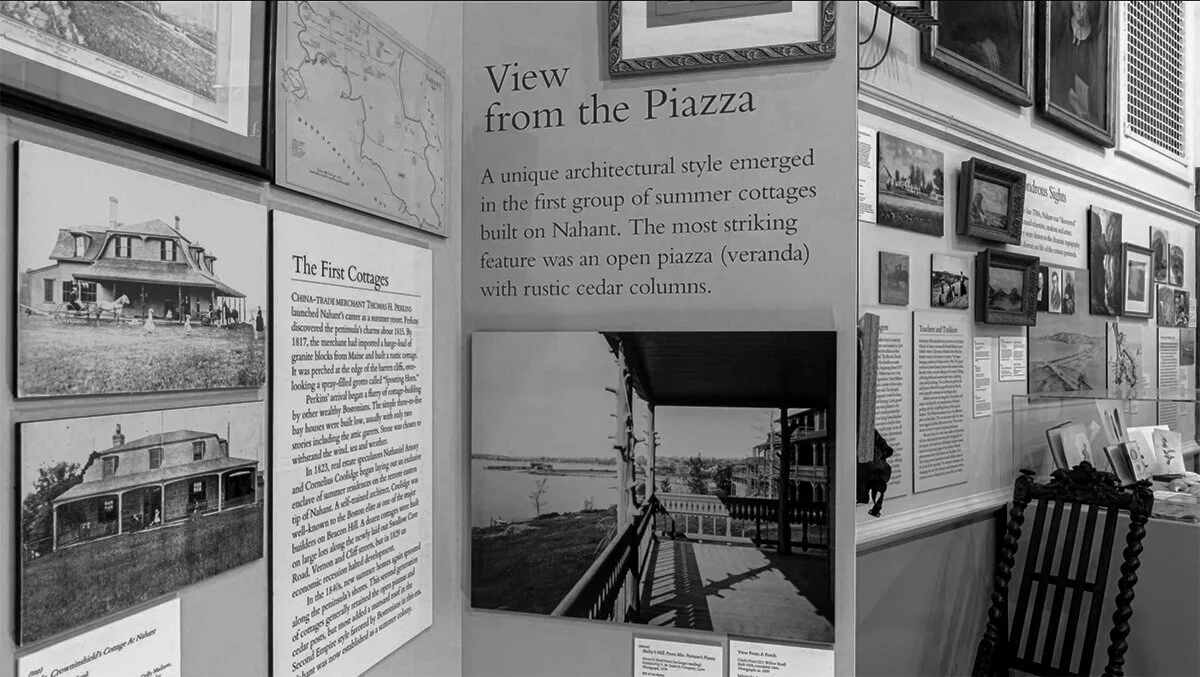
At our Annual Meeting on April 18, Calantha Sears gave a presentation of the beginning of the Nahant Historical Society in 1975. Please enjoy the video.
Calantha Sears chronicles the beginning of the Nahant Historical Society in 1975.

Everyday Heroes
The Nahant Historical Society wishes all of you happy holidays and a new year full of hope and recovery. These have been tough times for us all, but together we will get through it. Seaside Pizza is a shining example of the spirit of generosity and caring for others. The Sunday Boston Globe had a special section on people who have gone above and beyond to help others during Covid 19. We are proud that Beni Noci, and his team at Seaside Pizza, were recognized for their wonderful gift to the seniors of Nahant.
The Nahant Historical Society wishes all of you happy holidays and a new year full of hope and recovery. These have been tough times for us all, but together we will get through it.
Our historical records show that we have supported each other for many generations. On the News page of our website, is an article about how Nahanters worked together as a community in another difficult time - the 1918 pandemic. Today, the Living History page on our website shows that, as we have done in the past, we continue to help each other though the current Covid 19 crisis.
Seaside Pizza is a shining example of this spirit of generosity and caring for others. For three months during the early shutdown period of this pandemic, Beni Noci, who owns Seaside Pizza, delivered free food to the town’s senior citizens. Working with the Nahant Council on Aging, he continues to offer half-priced meals twice a week.

Boston Globe, December 13, 2020
The Sunday Boston Globe had a special section on everyday people who have gone above and beyond to help others during Covid 19. We are proud that Beni Noci, and his team at Seaside Pizza, were recognized for their wonderful gift to the seniors of Nahant. We are so happy that Beni and his work have gotten recognition beyond our small town, as the everyday heroes they are.
A beautiful, award-winning picture from 2013 shows Seaside Pizza glowing in the dark, as their work continues into the night. The light in this picture is a shining example of kindness in our community. It is important that we, as a community, continue to support Seaside Pizza. Consider giving your business to Seaside Pizza to keep those lights on, as they provide good food for us all and continued generosity to our seniors.

Photo Credit: Karen Hosking, 2013 Smithsonian Magazine Finalist for "The American Experience"

Happy 99th Birthday Calantha
We invite you to celebrate the 99th birthday of Calantha Sears on October 17, 2020. We will happily pass along your wishes through email or by mail. Send your emails to info@nahanthistory.org and cards can be sent to the Nahant Historical Society, 41 Valley Road, Nahant. We will make sure she receives them. Click below to read how Calantha was born to be Nahant’s historian and see pictures of her throughout the years.
Calantha Ruth Wilson Doane (now Sears) came into the world on October 17, 1921. She was delivered at home at 11 Highland Road by Dr. Lawrence Cusick. Bob, the family Collie, was under the bed as a silent witness to this great event.
Calantha was born to be Nahant’s historian. She will tell you she ‘has Nahant in her bones’, often referring to it as ‘Nahantitis’. Where did this interest in Nahant history spring from? When Calantha’s grandfather passed in 1927, she and her family went to live with her grandmother. Calantha slept in a ‘little corner’ of her grandmother’s room and, in the evenings, she told Calantha many stories - not of Snow White and such, but about Nahant. She told stories about the people and happenings as she and Calantha’s grandfather had witnessed them. Thus, the spark of interest in all things Nahant was ignited. Through Calantha, we are now enriched with the stories and facts that she has shared with us over the years, ensuring that the future will know the past.


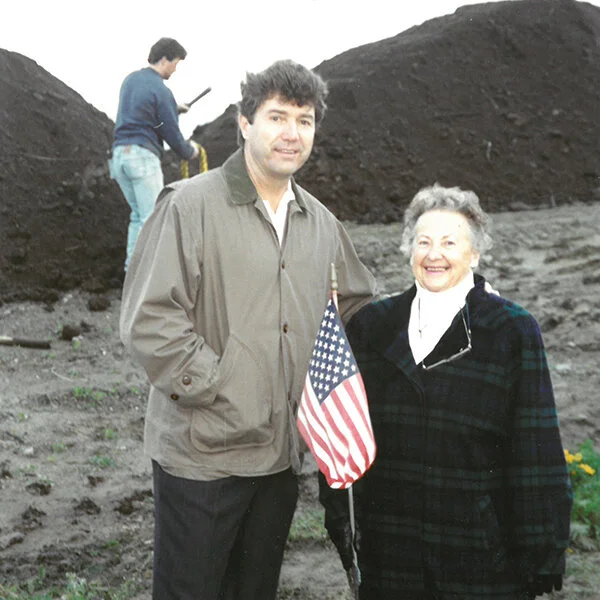


We invite you to celebrate the birthday of Calantha this week. She will be “90 plus 9” on Saturday, October 17th. We are not hosting a parade, but will happily pass along your wishes through email or by mail. Send your emails to info@nahanthistory.org and any cards to Nahant Historical Society, 41 Valley Road, Nahant, and we will make sure she receives them. Of course, if you have her home address, feel free to send them directly to her.
"Cheerio"
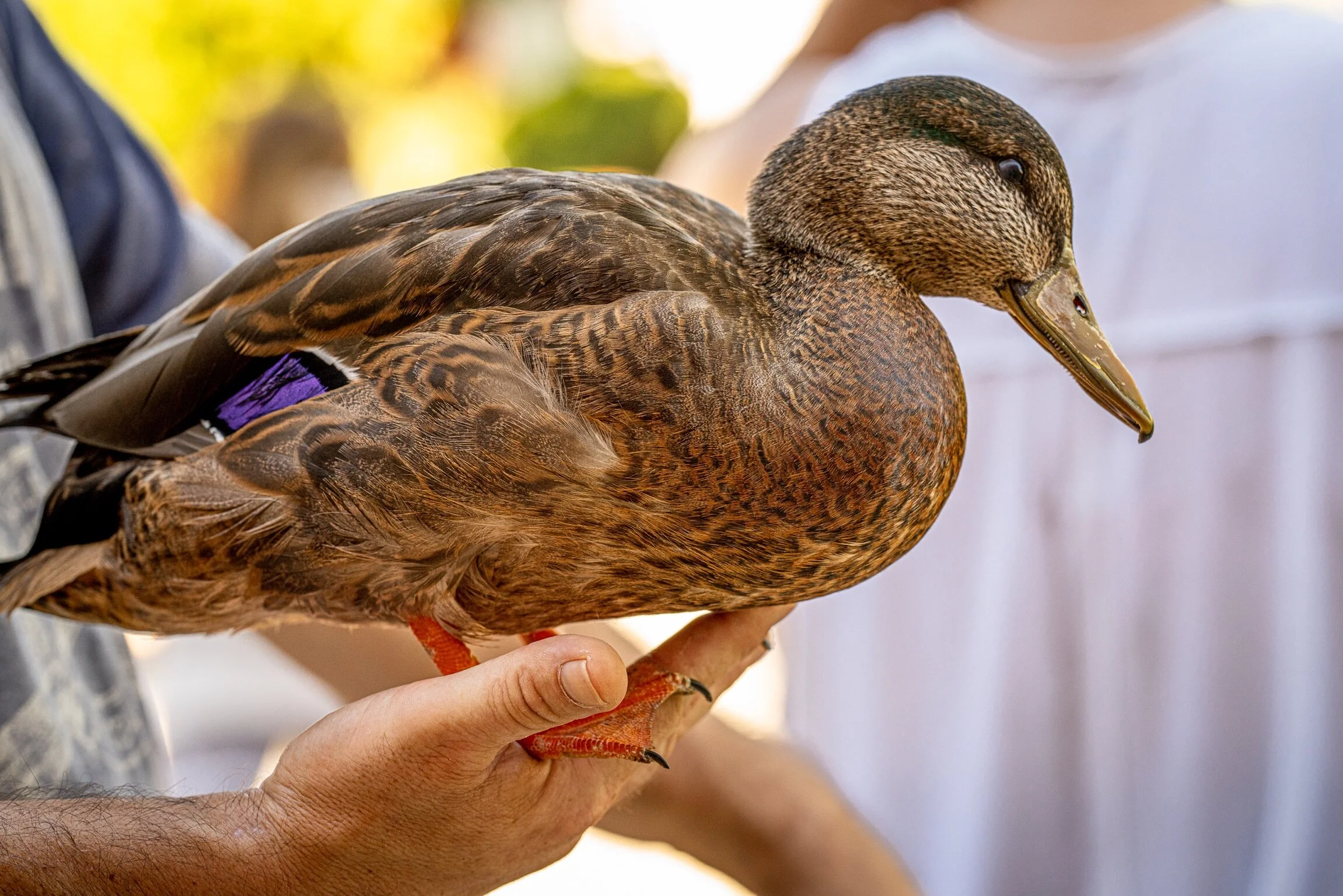
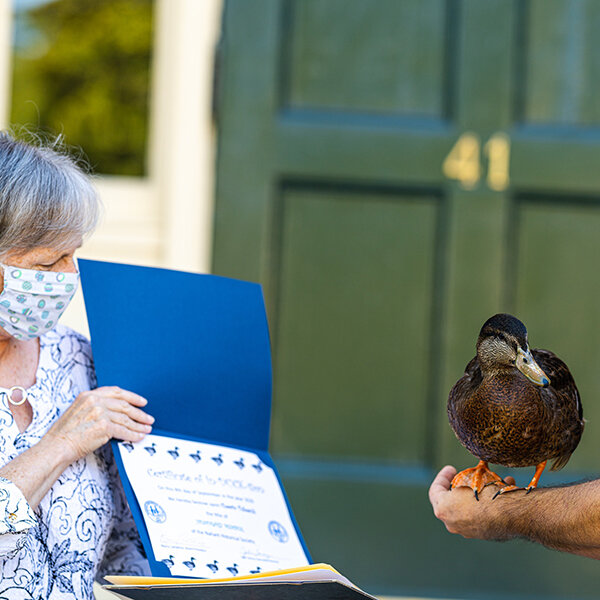
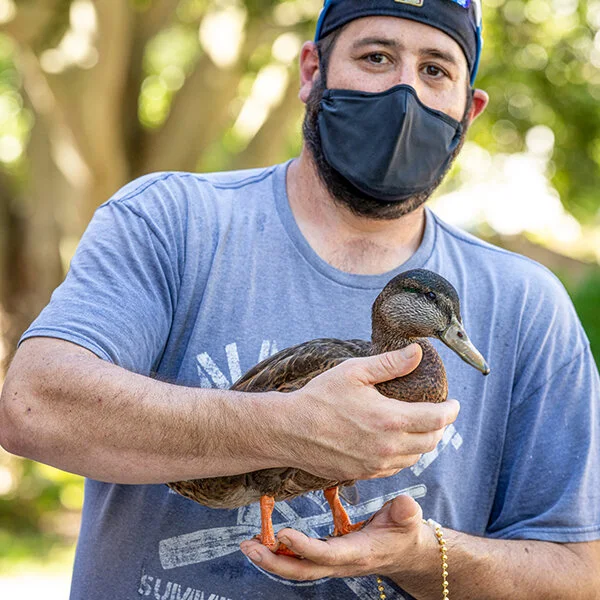
On Friday, September 4, 2020, The Nahant Historical Society made Cheerio the duck an Honorary Lifetime Member. Please see the video of his induction ceremony, pictures of the event, as well as the Proclamation which includes his duties.
On Friday, September 4, 2020, The Nahant Historical Society made Cheerio the duck an Honorary Lifetime Member. Please see the video of his induction ceremony, pictures of the event, as well as the Proclamation which includes his duties.
PROCLAMATION
By unanimous vote of the Nahant Historical Society Board, and with the blessing of our Curator Emerita, Calantha Sears, and as the Executive Director of the Nahant Historical Society, we here today induct Cheerio Thibeault as an Honorary Lifetime Member.
With this title of distinction comes certain responsibilities. We therefore charge Cheerio with the following duties:
To keep a birds-eye view from the sky on Nahant’s precious historic landmarks, encouraging his fellow flyers to avoid direct contact;
To conduct flyovers of our town wharf, public parks, golf-course, and beaches – reminding the human visitors that these places are visited, and may be the home to various wildlife species;
To stop by the Library to see that appropriate bird books, such as ‘Make Way for Ducklings’, ‘Duck on a Bike’, ‘The Duckling Gets a Cookie’, and others are available for check-out;
And, lastly, to continue to make his father proud by bringing joy and smiles into the lives of Nahanters and other humans.




Cheerio was also named one of Essex Media Group’s 2020 “Persons of the Year”

Johnson School Reflections on the Pandemic
Nahant’s 3rd and 4th grade students shared with us their thoughts and feelings during the pandemic so that we could document them for future generations. Click below to see how our school children’s everyday lives have changed through their own heartfelt words and drawings.
Nahant’s 3rd and 4th grade students shared with us their thoughts and feelings during the pandemic so that we could document them for future generations.
Third Graders, Johnson School
“Zoom for school and for church. Zoom with my family for Easter and for lunch bunch with my friends from school. It is now always Zoom. I can not wait to hug again and go to my friend’s houses to play.”
Drawing by Maeve
“I liked it because I got to spend more time with my family. I didn’t like it so much because I didn’t get to see my friends, though. I really liked it, too, because I did lots of paintings.”
Drawing by Eliana
“I think life has been pretty boring. I miss seeing my friends and learning at school I have enjoyed spending more time with my family and doing things like, baking, crafting and playing games with my sisters.”
Drawing by Elsie
“I feel like there is more work than there was. I don’t pack my backpack or lunchbox. There are more websites than it used to be. Kinda frustrated but I can play less or more than I used to.”
Drawing by Kenny
“I feel sad during this pandemic because I would usually be seeing my friends and having playdates. This pandemic has changed my daily routine because I would usually wake up and go to school and do work with my teacher Mrs.Durant, but now we are doing it virtually and it is not that easy. The things that feel different to me is everything here in Nahant, but I believe we can all get through this.”
Drawing by Heather
“Online learning, social distancing, wearing masks, and not being able to see my friends and family has been very hard. I feel upset, grumpy, and angry sometimes and wonder how this pandemic happened and when will life return back to normal?”
Drawing by Alexander
“I feel disappointed with the way I have to live right now. It’s hard not being with my friends and not going to school and staying home. I sleep later and go to bed later. We do different meetings now. I miss my school routine like gym and art. I can’t see my friends. I can’t meet new friends either. I’ve been quaranteaming with my cousin and aunt. I feel bad and good at the same time, in general. I feel bad because I go anywhere or be with my friends. I feel good because I can see my cousin and my family. I also get to swim in my pool.”
Drawing by Connor
“One thing that is different for me is that I have to wear a mask when I go outside. Another thing that is different for me is that I do online classes instead of going to school.”
Drawing by Adam
“I feel okay, happy to spend time with my family and pets. I don’t go to school anymore, no ballet, no karate, no beach, no birthday parties, no restaurants. ”
Drawing by Ione
“I don’t really like it because it is kind of not really seeing our friends. It changed my daily routine because usually I wake up and go to school but now I wake up and go to school on the computer.”
“It is nice, but the only thing that is hard is online school work because sometimes I sleep in late and I miss my meetings sometimes. I think that online school is hard.”
“I do not like not seeing my friends. But I also do like having more breaks then I usually do because I am on the computer more.”
“Having to restructure all my lessons has made me a first year teacher again without the pleasure of interacting vis-à-vis with my students every day. I became a teacher to work with children. Teaching this way is synonymous to being a bird with clipped wings.”
Fourth Graders, Johnson School
“I hate this ‘new normal’. I can’t hang out with my other friends. I also miss playing football with my other friends and watching it on TV too.”
“In this strange timer I’m living ok but sometimes I get very emotional and am happy to be with my family.”
“I know it’s hard right now but it’s not that bad actually because you get to experience what it feels like to be in a situation like this. So if you have it again you will know what to do and it won’t be scary.”
“The only thing I like about this time is that I can spend more time with my mom, dad, and twin sister.”
“Not being able to play with my friends, go to the grocery store with my family, play at the playground or see my teachers has been really frustrating.”
“I do not like the new normal because it feels weird to see someone you love but cannot hug them because they are afraid you have it.”
“I feel ok for now but I really miss my friends because 1. A lot of people are very funny and I miss laughing in person and 2. We could have gone over someone’s house and slept over.”
“I like being cooped up on my house sometimes but than again you just need to see people other than your family or you get kind of crazy.”
“The things I miss the most are seeing my friends and teachers at school. I miss going to the park and playing football. I really miss seeing my grandparents and my cousins every weekend.”
“I need to stay home all day every day and I can’t see anyone. So I have to FaceTime and zoom and text to communicate with others.”
“I am feeling very sad because I can’t see my friends, I have to wear a mask and I have to stay six feet apart from my friends.”
“It is hard living without playing organized sports, like basketball, baseball, lacrosse so it is hard.”
“I think this whole virus thing is crazy because everyone is scared and are trying their best to be safe and making sure they don’t get the coronavirus.”
“I feel hopeful because I know this will pass even if it takes a long time. I feel okay even though I am bored at home.”
“I just wish it was over already so when it’s summer I can jump off the wharf with my friends, and walk around town. I miss most seeing my friends, and eating out.”
“The things I don’t miss is waking up for school at 7:00 am, going grocery shopping and doing errands. How I feel about this is sad and also a little happy because I get to play video games with my friends more often.”
“I feel very happy that I get to spend quality time with my mom and dad.”
“The only good thing is I’m able to spend more time with my mom and my sick little kitty and I feel happy when I’m around them.”
Fry Day
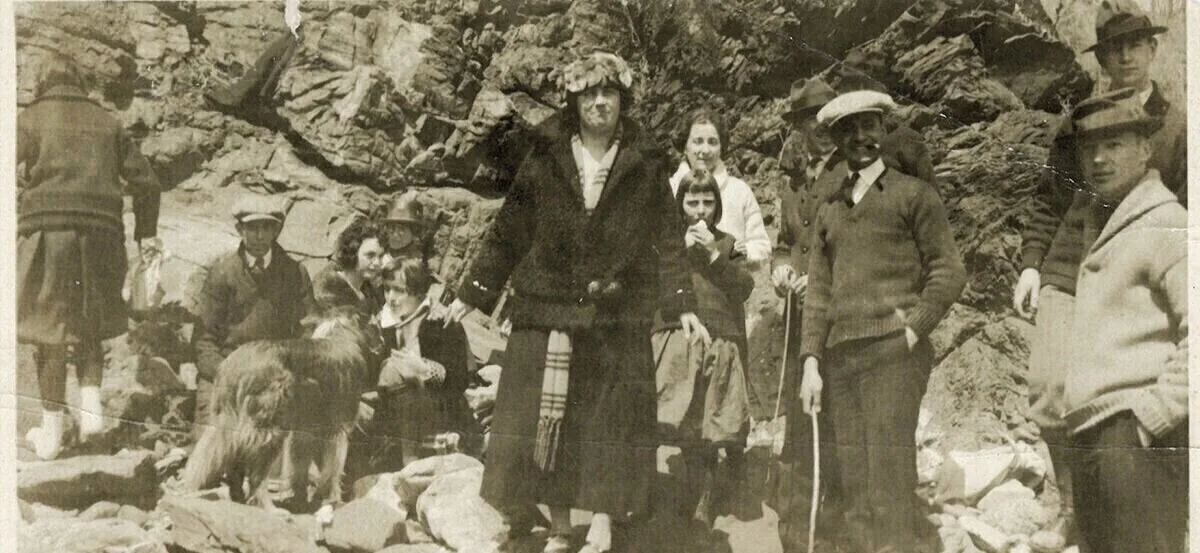
From at least 1895, and perhaps before, and lasting into the late 1950s, Nahant had a very special tradition that most families looked forward to each spring. On the 19th of April, or Fry Day, by late morning there would be an exodus of Nahanters to the rocks and beaches of the town for an outing. Mothers, fathers, children, grandparents, aunts, uncles, cousins, friends and even dogs all cooperated in carrying the well-filled picnic basket and a blanket to each family’s favorite spot on the shore (usually the same spot each year) for a cookout or a “Fry” as it was called at that time.
By Calantha Sears
There is one highlight of an earlier time that I would like to share with you.
From at least 1895, and perhaps before, and lasting into the late 1950s, Nahant had a very special tradition that most families looked forward to each Spring. In those days, the 19th of April was called then, as is now, Patriot’s Day (named in honor of the battle of Lexington and Concord). It was a State holiday, so there was no school for the children and people had the day off of work.
So FRY DAY – not spelled like the day of the week – became an eagerly awaited Nahant tradition. I don’t know how it started, but it seemed to be unique to our town. On the 19th of April, or Fry Day to us, by late morning there would be an exodus of Nahanters to the rocks and beaches of the town for an outing. Mothers, fathers, children, grandparents, aunts, uncles, cousins, friends and even dogs all cooperated in carrying the well-filled picnic basket and a blanket to each family’s favorite spot on the shore (usually the same spot each year) for a cookout or a “Fry” as it was called at that time. It was a wonderful day! Sometimes it was warm – sometimes, as you know, the east wind would come up and it would be cool, but it was always great fun.

Excerpts from the Lynn Item
1908 - With the coming of Patriots’ Day the season of 1908 was inaugurated at Nahant. The bowling alleys were open for the sport, and the rollerskating rink at Bass Point was opened. The ball game in the afternoon also has its coterie of spectators.
The time honored custom of holing ‘fries’ on the beach and rocks was indulged in by both young and old, and from Clark’s Point, where a chowder was merrily boiled over a roaring fire of driftwood, Swallow’s Cave and Castle Rock, to where a party of people here held on the rocks for nearly six hours by the exceptionally high tide, all enjoyed themselves to the utmost.
1924 - Saturday, April 19, was the annual ‘fry day’ through the town and East Point seemed to be the most popular resort for these parties. Rain at first threatened to put a damper on the parties, but when the sun broke through the clouds at noon, the parties that had been planned gathered as if from nowhere and enjoyed the sports and basket lunch.
1927 - Tuesday was the annual day of “Frys” by both young and old in the town, and from early morning till noon, various parties could be seen making their way to the rocks, and prepare one of those never to be forgotten meals, and eaten in the open.
Time was when practically everyone in town went on a ‘Fry” but the old order of things appear to be passing, although among the older families the 19th of April always means but one thing – the joy of attending one of these parties.
The ideal weather conditions of the holiday brought out an unusually large number of parties and many of them came from out of town, but the Nahant residents had their own particular spots where they went and enjoyed their annual spread with a great deal of pleasure.

Nahant digs into its plants, then and now.
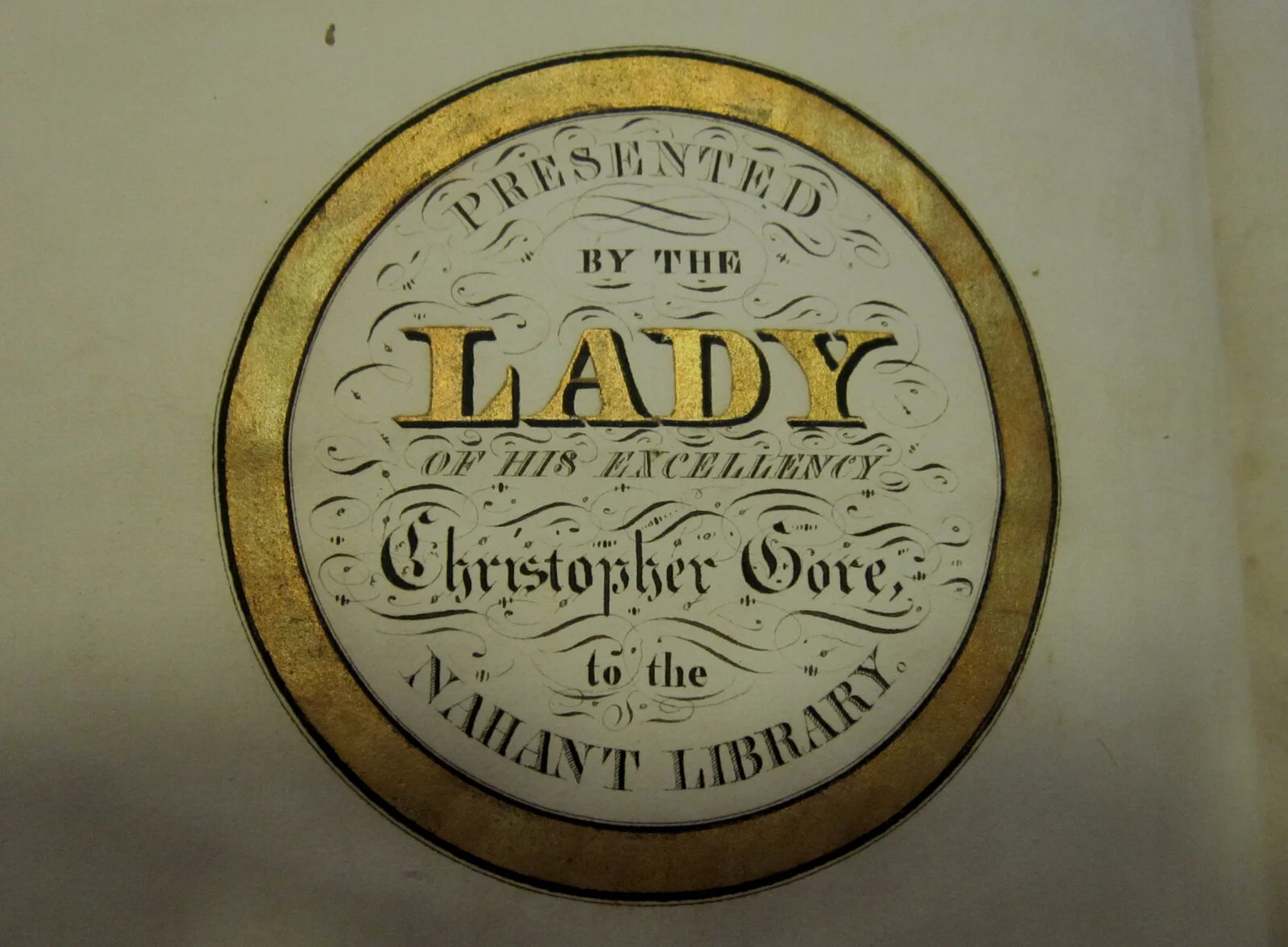
The Massachusetts Board of Library Commissioners is providing Nahant with a $15,000 federal grant for the initiative, Go Local: Nature in Nahant. The project will involve discovering the plants that grow — and once grew — in the seaside town’s unique natural surroundings, using a 19th-century pressed plant collection held by the library. The herbarium was created in 1897 by Nahant schoolteacher Florence “Miss Flossie” Johnson and her pupils.
By John Laidler The Boston Globe, July 30, 2019
The Nahant Public Library plans to join with members of the community to explore the town’s current and historic plant population.
The Massachusetts Board of Library Commissioners is providing Nahant with a $15,000 federal grant for the initiative, Go Local: Nature in Nahant. The project will involve discovering the plants that grow — and once grew — in the seaside town’s unique natural surroundings, using a 19th-century pressed plant collection held by the library.


The herbarium was created in 1897 by Nahant schoolteacher Florence “Miss Flossie” Johnson and her pupils. That year, Johnson and her class entered 184 specimens into a Massachusetts Horticultural Society show, earning them a prize. These and more than 200 additional specimens make up the collection.
The library will digitize the collection to make it more accessible to scholars and the public. The project also involves creating exhibits; holding a Walk Nahant Day; offering a lecture series and a school program; and creating a time capsule.
“With this two-year grant, we hope to make Nahant’s natural history come alive in many ways,” said Sharon Hawkes, the town’s library director, said in a statement. “With the town’s help, we can better understand the answer to the question, ‘What grew here, and what should we preserve for the future?’”

There is in Nahant a wonderful boulder
"The Nahant Boulder" is an old friend to those who love to study rocks. The boulder was doubtless carried to Nahant by the ice, when this part of the country was ice covered, and deposited when the ice melted. The stone is well known to geologists.
This was written in the Daily Evening Item sometime between 1915 and 1932:
"This boulder until recently lay upon the beach, a little beyond Sand point, upon the harbor side of the peninsula, at a point about opposite the watering stand at Little Nahant. When the Nahant Street Railway was laid down, the lonesome boulder was seized upon as good material for stone ballast and it was broken into three pieces. It was then discovered that it belonged to the Metropolitan Park Commission, and further work upon its demolition as a boulder ceased.
The work, however, brought to public attention the fact that it was of a composition unlike any other known about Nahant, and as its not uncommon, the wonder-loving element began to circulate stories as to its origin, one going so far as to state that there was nothing like it this side of the Great Lakes. It is always well, in dealing with a science so abstruse as geology, to seek a high source of authority or confirmation.

The Item, therefore, sought the opinion of Prof. John Henry Sears, curator of geology, mineralogy and botany at the Peabody Museum, Salem.
Hardly had the wrapping paper been removed from the fragment submitted to him, no mention of the locality having been made, when Prof. Sears remarked, 'Ah, a message from the Nahant boulder?'
In reply to specific queries, he said in substance: - 'The boulder is a quartzite conglomerate; quartzite pebbles contained in a deposit, and part of an old beach conglomerated, or hardened together. Not so old as the Cambrian layers, because Cambrian pebbles compose it. It occurs in situ upon Breakheart Hill, Saugus; not at the farm, but some distance further up the hill, where there is a ledge of it.
The boulder was doubtless carried to Nahant by the ice, when this part of the country was ice covered, and deposited when the ice melted. The stone is well known to geologists, and I have a small piece of it here in the museum grounds."



Molly Conlin was our guest speaker at the 2018 annual meeting. She shared with us the ins and outs of putting this incredible piece of art together. Under Molly’s gracious leadership, a total of 30 Nahant women gathered at the Conlin home to create the quilt in honor of our country’s Bicentennial celebration. We learned from Molly, and some of the other quilters who were in attendance, that a few husbands ‘lost’ their shirts and ties for the good of the Bicentennial. Some of their children were also involved in the project.