


Operators of the Nahant Phone Exchange
All Nahant calls (incoming and outgoing) were handled by the Operators at the Nahant Exchange on the corner of Valley Road and Spring Road, from 1911 until Nahant went ‘over dial’ in 1960. They definitely had their fingers on the pulse of Nahant. Not only did they know what was happening, they knew where everyone was. If someone needed Dr. DiClerico, they usually know where they could get a message to him.
All Nahant calls (incoming and outgoing) were handled by the Operators at the Nahant Exchange on the corner of Valley Road and Spring Road, from 1911 until Nahant went ‘over dial’ in 1960. They definitely had their fingers on the pulse of Nahant. Not only did they know what was happening, they knew where everyone was. If someone needed Dr. DiClerico, they usually know where they could get a message to him.
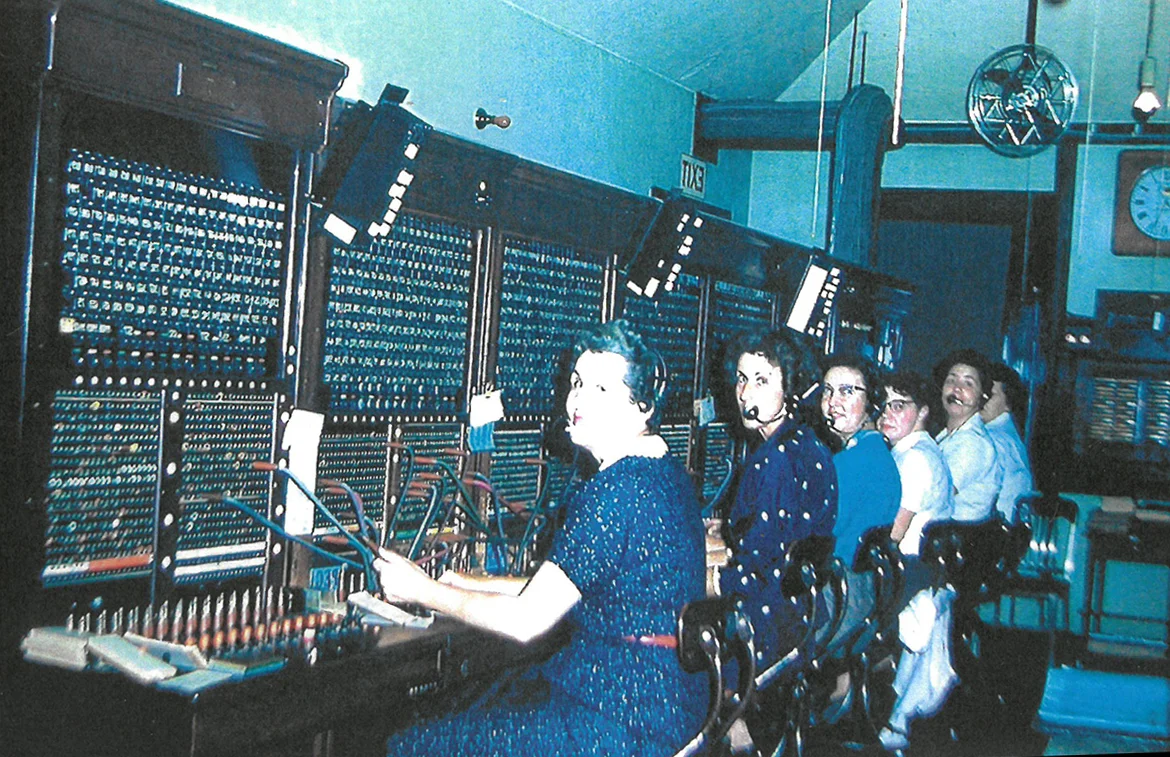
There were at least 18 women operators: Anna McCormack Steele, Margaret McCormack Morton, Mae Prendeville, Betty Mitchell Zeitz, Jessie Dunn, Dotsy Tombeno Feilder, Alma Ross, Mary Gallery Carey, Marie Athy hosker, Sally Farmer Frisone, Connie Bonner Quinn, Barbara Kairevich, Winnie Kane, Lorraine Locke, Hellen Gosselin Foisey, Margaret Waters Burse, Jerry Tombeno Cataggio and Mabel Connarton.
On December 11, 1932, there was a fire at the Exchange, cutting off communication to the outside world. To quote the Item “The night watchman was overcome by smoke and the heroism of three operators, who stuck to their posts, averted destruction of the entire plant, fire missing the main cable by three feet. Fear that gangsters might invade the communication stricken community during the night held the population in fear while every available policeman and coast guardsman patrolled the town to prevent lawlessness as the 600 telephone lines were rendered useless. No outbreaks were reported by Chief Thomas Larkin". The three operators who stayed put were: Mrs. Johnson, chief operator, Miss Ruth Taylor and Miss Margaret McCormack.
The Exchange was shut down on December 3, 1960. On the final day, the operators were allowed to have their family come in to ‘help’ connect calls. Kathy Carey Letourneau and Mike Golding both had the privilege of connecting calls that day.
The Founding of Nahant’s First Public Library
By Bonnie Ayers D’Orlando, NHS Curator (retired)
Nahant Historical Society salutes Nahant Public Library on the bicentenary of its founding. Among our museum’s rarest artifacts is a framed collection of four original letters. Although fragile and faded after 200 years, they document that beginning. On Saturday June 1st, 2019, the letters will be displayed for one evening during the Library’s gala.
By Bonnie Ayers D’Orlando, NHS Curator (retired)
Nahant Historical Society salutes Nahant Public Library on the bicentenary of its founding. Among our museum’s rarest artifacts is a framed collection of four original letters. Although fragile and faded after 200 years, they document that beginning. On Saturday, June 1st, 2019, the letters will be displayed for one evening during the Library’s gala.
Who was William Wood? He was a Boston merchant, and an early 19th century summer visitor to Nahant, staying at the Breed’s homestead, now the Whitney Homestead at 369 Nahant Road. In a letter dated April 8, 1819, Wood approached the year-round residents with a valuable gift. He had “collected from various quarters about ten hundred volumes of books, for the purpose of forming a library at Nahant…” The subscriptions or borrowing fees would be used to purchase trees “in order that your pleasant abode may be rendered delightful by shade.” The Johnson and Hood families responded, quickly agreeing. Portraits of one of the Johnson brothers, Caleb, and his wife Olive hang in the Society’s Lowell Gallery. Find out what Olive holds in her hand.

Engraving “The Late William Wood, Esq.” Ballou’s Pictorial Drawing Room Companion, (Boston, MA). Vol. XIII, no. 12, September 19, 1857, p 188.
By July 8, 1819, Salem diarist Reverend William Bentley reported a “School house is of stone, mostly built by the visitors from Boston. Stands on the height on the east of the lane & has an enclosed yard, a pleasant room well plastered and ornamented with two Ionic columns brought from Europe & fixed to the E. wall. In the building is a Library of several hundred volumes & of these a Catalog is kept with the names of the persons who gave them, and the list and books are respectable.” The columns were treasured by generations of Nahanters, and moved from school to school over two centuries. Now the marvelous 15th century Italian Renaissance pilasters by the Gagini family grace the south wall of the top floor of the Nahant Community Center, formerly the 1904 Valley Road School.
As an historian, I was curious as to why Wood started a lifelong “hobby” of establishing libraries, of which Nahant was the first. Several accounts paint him as an unusual, sometimes eccentric, yet modest man. There appear to be more than one reason. Prior to his birth in 1777, his family had been settled in Charlestown for at least three generations. The Woods prospered as merchants, and owned much undeveloped land, too. In the aftermath of the Battles of Lexington and Concord, they were forced to evacuate as the British put Boston and Charlestown under siege and naval blockade. Much of Charlestown’s prosperity depended on maritime trade, so the Woods suffered severe losses. During the Battle of Bunker Hill on June 17, 1775, most of Charlestown was destroyed by flaming shot cannonaded by the British Navy. When the fledgling American army forced the British out in 1776, the family rallied. Probably that family resilience taught Wood the essential value of building community. Charlestown rebuilt as the theatres of war moved south, and began to flourish with creation of a new nation during Wood’s childhood.
According to the Boston Directories, William Wood became a merchant and importer early in the 19th century, later partnering with his younger brother Timothy. The founding of the Boston Athenaeum in 1807 inspired him to sign on as an original subscriber, as noted by Josiah Quincy in his 1851 History of the Boston Athenaeum (p 43-44). This library became the cultural center of Boston during the 19th century, and continues as one of the most distinguished institutions in America. Using that outstanding example, Wood began what he called his “hobby,” starting with Nahant in 1819. He asked family, friends, and others to contribute books to this effort, finally totaling 1,075 volumes. Some still survive, due to careful stewardship of townsfolk, and eventually, librarians. The late Library Director Daniel deStefano put each original volume in custom archival enclosures. Current Director Sharon Hawkes has taken digital images of surviving donor inscriptions to research. You will see more on June 1st.
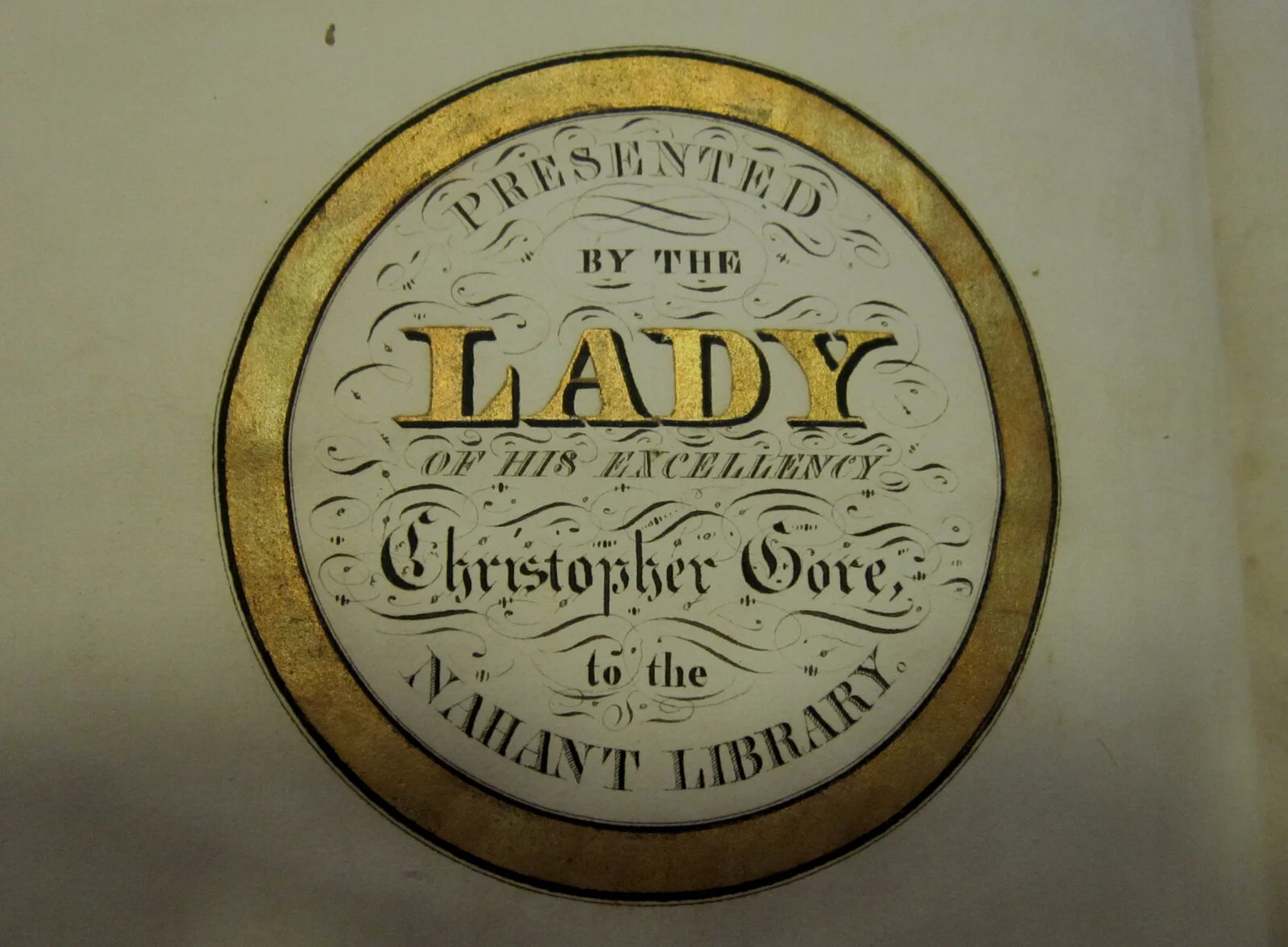
However, one volume is safeguarded here at the Society as one of its most cherished artifacts. On October 24, 1819, Reverend Bentley documents this gift: “The wife of Christopher Gore, our late [previous, not deceased] Governor has given a Prayer Book, presented to her by one of the Royal family to the Library at Nahant, which is increasing.” According to Nahant legend, the regal giver was King George the 3rd. Both the artifact and research backs much of this story, and more. This volume has dark green and gilt royal monogrammed covers. It is engraved with “Mrs. R. Gore” on the front, and “Windsor Chapel” on the back. Inside is a gilded inscription from her to the Nahant Library. Rebecca Gore accompanied her diplomat husband Christopher to London, where he was an American commissioner from 1796 to 1803, and then Chargé d’Affaires from 1803 to 1804. A person of rare talents, Rebecca designed their magnificent neoclassical mansion on their farm in Waltham, Massachusetts. Now a museum, Gore Place, is renowned for being the most technologically advanced Federal period house in New England. See https://goreplace.org/
What of Wood’s desire to give Nahant “delightful shade?” In his 1928 Some Annals of Nahant (p. 61) library trustee Fred A. Wilson notes that William Wood and Thomas Handasyd Perkins planted elm trees from Summer Street to the present day Whitney Homestead. The latest of our four Wood letters is to Samuel Cabot, Jr., the son-in-law of Perkins who built the first summer cottage for the Perkins-Cabot family in 1820. On December 6, 1820, Wood passes to Cabot the oversight of library subscription fees to purchase ornamental trees from Princes Nursery, (Flushing) Long Island, New York. This plant market had become renowned for its far-reaching inventory, and included among its customers George Washington, Thomas Jefferson, Lewis and Clark, and the British King William IV.
Why did Wood ask Cabot to take over? He had already completed his second project, the Apprentice Library of Boston, in February 1820. Over the rest of his life, he established more libraries in Boston, New York City, Albany, and Canandaigua, New York, Philadelphia, New Orleans, and even Liverpool, England. Most unusually for the time, he also worked to get books onto merchant ships. Let us honor Wood’s community building spirit, and that of Nahanters past and present who enjoy and support Nahant Public Library. See you there on Saturday June 1st, 2019.
Women's Right to Vote
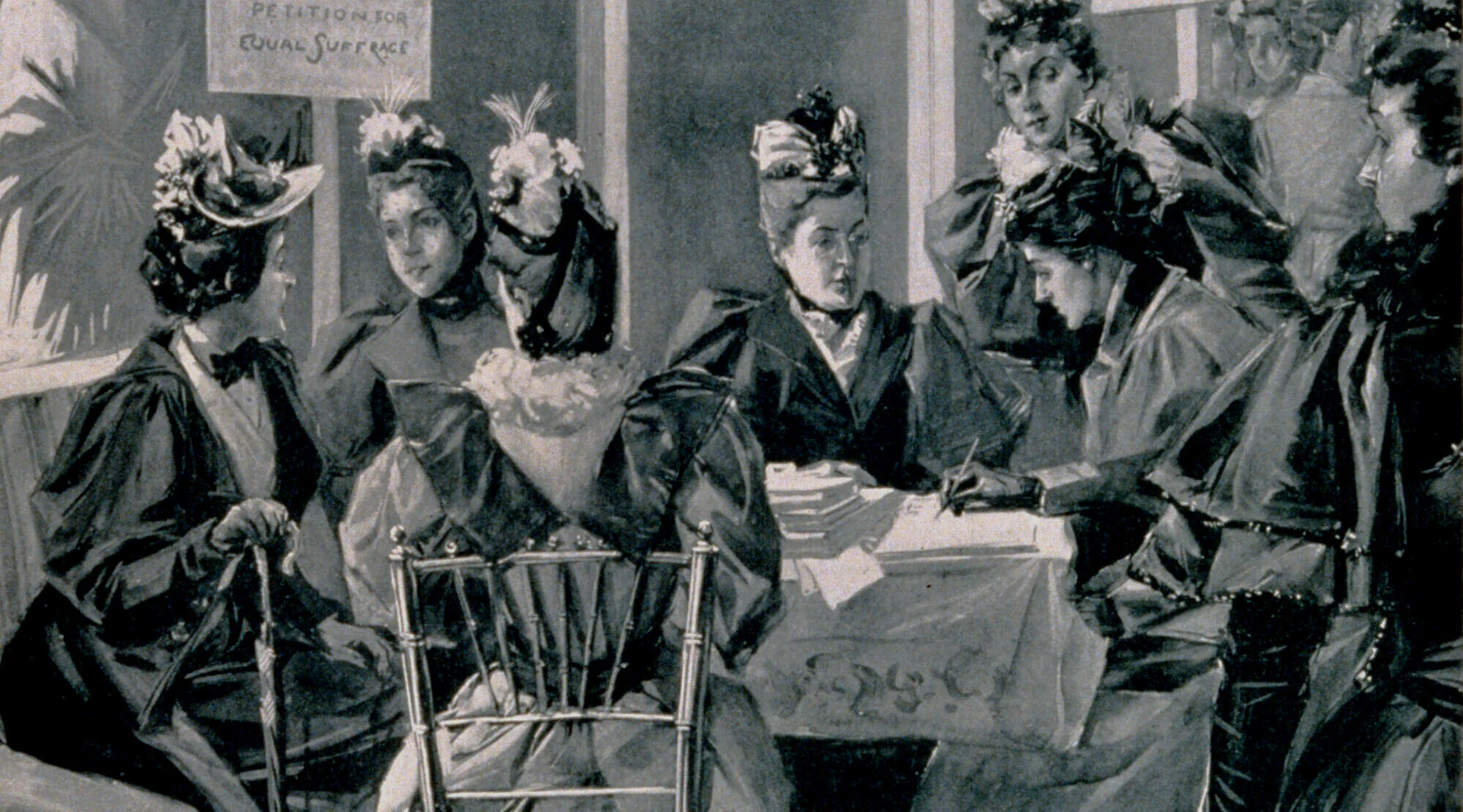
On the 100th anniversary of the ratification of the 19th Amendment, we thank the strong women who fought for equality and support those who continue to fight for what is fair and equitable. Read more about how the smallest municipality in Massachusetts played an important part in the suffrage movement.
Daily Evening Item – Lynn, Mass Monday March 30, 1914
“NAHANT WOMEN AFTER SENATOR LODGE, ET AL” - "Nahant women suffragists will throw down the gauntlet to Senator Lodge and other political leaders in their town who are anti-suffragists and will organize a Women Suffrage league there. They have decided to hold a meeting in the home of Mrs. Thomas P. Curtis next Friday afternoon at 3 o’clock and there and then they will form Nahant’s first suffrage league.
Recently Mrs. Curtis was one of the candidates for the school committee of Nahant. She argued that there should be a woman upon the school board and made a hot battle for the place. When the fight was nip and tuck, Senator Lodge made a speech, in which he stated that he had voted for Mrs. Curtis’ opponent.
Senator Lodge’s attitude, the suffragists feel, was in a large measure responsible for swinging just enough votes to cause her defeat. Mrs. Curtis’ defeat caused the suffragists in that town to decide to form a suffrage organization there. It is planned to make the Nahant Equal Suffrage league one of the most active suffrage organizations in the State. Mrs. Curtis in the chief marshal of the big suffrage parade which is to be held in Boston on May 2 next."
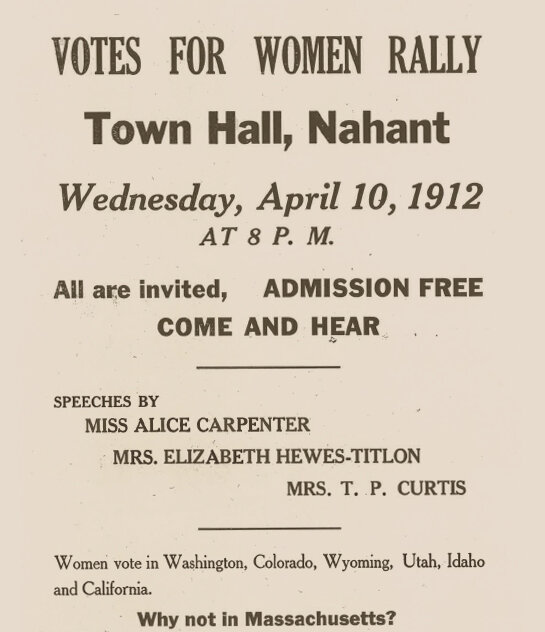
This was not the first time Mrs. Curtis, a summer resident of Nahant, had some words for Senator Lodge. In April of 1912 Mrs. Curtis, a member of the executive board of the Equal Suffrage association, was the key speaker at a ‘votes for women’ rally at Town Hall. Mrs. Curtis reported to the Daily Evening Item that she ‘hopes to convert the Senator to her cause….. Other states have appreciated the benefits of this movement and are taking it seriously, and it stirs my civic pride to think that Massachusetts is behind in the race. I expect a large gathering in the Town Hall this evening, and when Senator Lodge comes home from Washington I shall be waiting for him. As soon as he is rested I am going to try to gain his endorsement and support”.
We are not entirely sure how that planned meeting went as there are no more articles on the suffrage movement in Nahant until September of 1913. This time, however, Mrs. Curtis was not a key speaker as the meeting was for anti-suffragettes, or the Massachusetts Association Opposed to the Further Extension of Suffrage to Women. The women speakers on this occasion were Mrs. Alice Vant George and Mrs. William L. Putnam.
Mrs. Putnam gave statistics of the anti-suffrage movement. She said, “there was nothing destructive, but entirely constructive in the movement. It was their desire to have woman accomplish all that she could.” She was not pleased at the prospect of a visit from Mrs. Pankhurst (Emmeline Pankhurst, best known for organizing the UK suffragette movement.) Mrs. Putnam said that ‘women must keep out of politics. In 90 percent of cases, the women would follow their husbands, and the betterment desired could not be obtained. The reason we believe in not giving the vote to women is that we feel we can do better work without it”.
The second speaker, Mrs. Alice Vant George, said that ‘the suffragists are behind the times….Women’s superiority or inferiority is not based on whether she has identical rights with man. There is a lot of talk about rights and too little talk about the duties and responsibilities of women. We cannot treat women in industry like men, for we must protect the future motherhood. If every in the history of our country there was a demand for calm judgment and sober reason, it is now. Two great menaces to the suffrage cause are militancy and socialism’. Mrs. George urged that women “be more careful before allying themselves with causes detrimental to the great cause of being a woman. The advocacy of bomb-throwing and lawlessness as has been made by prominent suffragette speakers proves that women are not yet fit to vote”.
Women from neighboring cities and towns attended this meeting. Suffragettes and Anti-suffragettes. According to the Lynn Evening Item, both sides of the issue ‘felt well repaid’ for attending the ‘anti’s’ meeting. At future rallies, Mrs. Curtis made it clear that she is against the methods of English sisters, who go around armed with war club and hatchets.
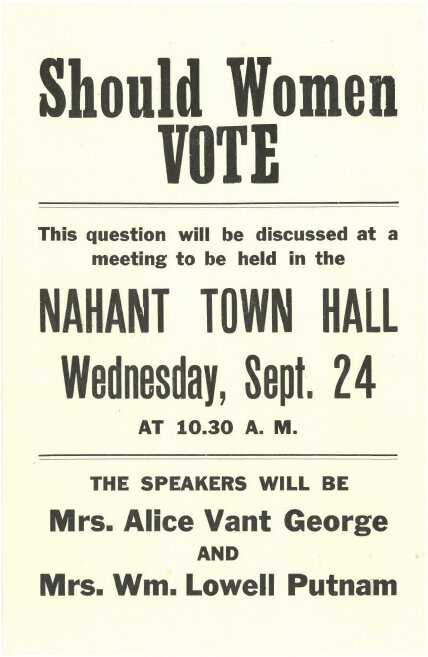
In February of 1915, the Massachusetts State Legislature passed a bill allowing for Women’s Right to Vote to be on the ballot in November. Mrs. Curtis was ‘perfectly delighted with the splendid vote’ and was confident that ‘when the question is put on the ballot, that we shall win”. A statement in the Daily Evening Item on February 17th by Mrs. Thomas Roland, then chairman of the Nahant Women’s Suffrage stated, “Of course, I feel very glad that we have at last secured the chance to place the suffrage bill before the people. I am very sorry, however, that the vote in the State House yesterday could not have been unanimous, when such a large majority voted in favor of it, The real work of the suffrage leagues will now commence in earnest". And it did. On both sides.
Several meetings were held at the home of Mrs. Roland. Officers of the Nahant league were Mrs. Abbie Roland, President, Miss Olive Grover (well-known teacher) Vice President, Mrs. Francis Kellogg Curtis, secretary/treasurer, Miss Mildred Cochrane, chairman of ways and means, and Mrs. Agnes Andrews, publicity chairman. Bake sales were held to raise money, some of which was sent to the Massachusetts Suffrage League. On October 16th, led by Mrs. Agnes Andrews, a contingent of about 20 Nahant women marched in the Suffrage Parade in Boston, with Mrs. Thomas Curtis being one of the leaders of the parade and occupying one of the seats on the stage of Mechanics’ building, where a large meeting was held after the parade. Among these women were familiar Nahant and Lynn names: Johnson, Wilson, Lewis, Newhall, and Pinkham.
Sadly, when November came, the Suffrage bill was defeated 2 -1. The vote in Nahant was 211 ayes to 101 nays. Fortunately, this did not defeat the staunch and dedicated suffragists. They continued to hold rallies, bake sales, and meetings. The ‘antis’ did not give up either. However, not much is recorded in the local papers for the next few years with a world war being fought. The news turned to the efforts of all the citizens coming together to support the young men heading off to fight. Many women joined the cause as nurses, doctors, ambulance drivers, or translators or on the home front working the fields and filling industrial jobs vacated by men who were off to war.
As a result of World War I and the roles that women filled, doing what was needed – when it was needed – for as long as it was needed, the Suffrage movement finally got the attention of President Woodrow Wilson, whose daughter, Jessie Woodrow Wilson Sayre, was a leading suffragist. He asked Congress in 1918, “We have made partners of the women in this war…Shall we admit them only to a partnership of suffering and sacrifice and toil and not to a partnership of privilege and right?” Even with this, it would still take two more years.
We thank the strong women who fought for equality and support those who continue to fight for what is fair and equitable. We are grateful that the smallest municipality in Massachusetts played an important part in the suffrage movement.

Greenlawn Veterans Map
The Greenlawn Veterans Map Project was created as an aid to ensure that the War medallions and flags are placed at the correct graves so that all Nahant Veterans are honored. Producing a color-coded map of Nahant Veterans graves was the focus of several Nahant Boy Scout Troop 50 Eagle projects. Find your loved one’s grave with these downloadable Maps and Lists.
The Greenlawn Veterans Map project was conceived and mentored by Calantha Sears as an aid to ensure that the War Medallions and Flags are placed at the correct graves so that all Nahant Veterans are honored every Memorial Day. The Medallions are removed periodically due to cemetery lawn care and maintenance and often are misplaced or lost in the course of managing the cemetery grounds.
Producing a color-coded map of Nahant Veterans graves was the focus of several Nahant Boy Scout Troop 50 Eagle Projects. Initially begun by Rod Claussen (Eagle Scout 1992) the project was continued by Brian Baranek-Olmstead (Eagle Scout 1996), Colin Roy (Eagle Scout 2004) and finally Ted Maroney (Eagle Scout 2008). With the help and support of members of Troop 50, the scouts researched the veterans using records provided by the Town Hall, a Veterans Report from 1999, an updated 2008 Veterans Roster supplied by Mike Kairevich and verification offered by friends and family members.
Based on the collected data and rough sketches generated by Troop 50 scouts, the maps were produced by Alice Volk-Roy and are updated annually from Town Hall lists, newspaper or online obituaries, and oral testimony of family members.
Download PDF’s here
In order to maintain the accuracy of this list and resulting mapping, notification of any corrections or additions are welcome here.

Dr. Joe
For 50 years, Dr. DiClerico's house calls were the rule rather than the exception. Most babies never saw the inside of the inside of a hospital delivery room. He recalled "in my first 10 years, 75% of the deliveries were done at home. Women just didn't want to go to the hospital." His first official delivery was David Solimine Sr. (of Solimine Funeral Home). When DiClerico retired in 1984, Solimine recalled "He's done so much good, given more free treatments. He always had a fresh boutonniere on his lapel and a cigar in his mouth. The nurses at the hospital would have to yell at him to take it out. It was just one of his trademarks."
For 50 years, Dr. DiClerico's house calls were the rule rather than the exception. "I used to get up at 5:30am, operate until 7:00am, make 10-15 house calls and then go to the office to see patients until 9:00pm." said DiClerico in a Lynn Item interview.
Most babies never saw the inside of the inside of a hospital delivery room. He recalled "in my first 10 years, 75% of the deliveries were done at home. Women just didn't want to go to the hospital." His first official delivery was David Solimine Sr. (of Solimine Funeral Home). When DiClerico retired in 1984, Solimine recalled "He's done so much good, given more free treatments. He always had a fresh boutonniere on his lapel and a cigar in his mouth. The nurses at the hospital would have to yell at him to take it out. It was just one of his trademarks."
Julie Tarmy of Nahant recalls her memories of Dr. DiClerico: "He was a staple to our home. He was also the school physician when I was a kid. Being the 7th of 9 kids, we had lots of the usual maladies of the day: measles, mumps, chicken pox, broken bones and the average cold and sniffles. We were also hit with serious and sometimes deadly afflictions: Epilepsy, Polio and Meningitis. "Dr. Joe" was there for all of it. We would visit the office at his home on Prospect Street in Nahant or at his Lynn office (85 Nahant Street, Lynn).
I remember vividly going to his Nahant office to have my surgical stitches out. There was a separate entrance at his house, next to the garage, with a small waiting room with wooden chairs and a little window. It was almost hidden by tall bushes and climbing plants. His office was small, with a desk and one exam table.

Born in Lynn, Joseph DiClerico attended Georgetown University Medical School and was Union Hospital's Chief of OBS-GYN from 1947-1968. He served as Lynn's Public Health Commissioner and was also Essex County Medical Examiner for 20 years.
Julie adds “In addition to office visits, he performed many surgeries on my siblings and me. We would go in groups to have our tonsils out. I was in the same room as two of my brothers for our tonsillectomies.
Both my sister and I had our appendixes out at Union Hospital. I had my appendectomy at the age of 11, a week before my big ballet recital. I asked if I would be able to dance the following Saturday. Dr. Joe’s response was that I would be lucky to be walking out of the hospital in a week. He was right. When I remember Dr. DiClerico, it always brings a smile. He was a good man, cigar and all!!"
Bicentennial Quilt
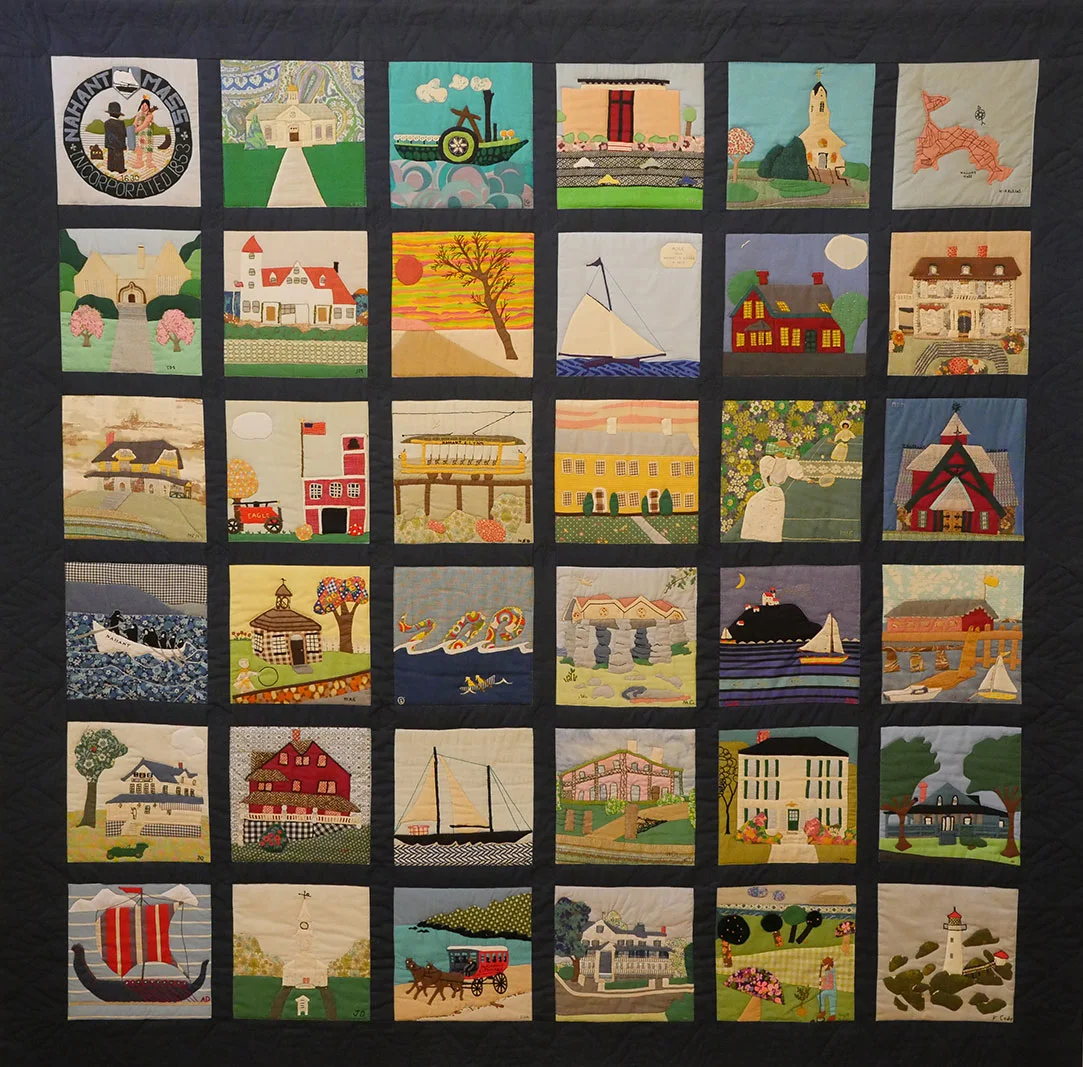
Molly Conlin was our guest speaker at the 2018 annual meeting. She shared with us the ins and outs of putting this incredible piece of art together. Under Molly’s gracious leadership, a total of 30 Nahant women gathered at the Conlin home to create the quilt in honor of our country’s Bicentennial celebration. We learned from Molly, and some of the other quilters who were in attendance, that a few husbands ‘lost’ their shirts and ties for the good of the Bicentennial. Some of their children were also involved in the project.
Molly Conlin was our guest speaker at 2018 annual meeting. She shared with us the ins and outs of putting this incredible piece of art together. Under Molly’s gracious leadership, a total of 30 Nahant women gathered at the Conlin home to create the quilt in honor of our country’s Bicentennial celebration. We learned from Molly, and some of the other quilters who were in attendance, that a few husbands ‘lost’ their shirts and ties for the good of the Bicentennial. Some of their children were also involved in the project.
The quilt was made entirely by hand, from the hand-drawn templates to the last stitch in the individual squares. Life-long friendships developed during this process and hold strong 43 years later. Many of the original ‘Tilting Quilters’ attended the meeting, as did family members of those no longer with us.Some of these ladies, joined by newcomers, continue to create wonderfully nostalgic quilts, representing various histories of Nahant. These quilts are often put up as raffle items in support of good causes important to Nahant.
After hanging in the Public Library for over 40 years, without a proper airing out, the quilt was taken to Windsor Conservation in Dover. Due to the variety of materials used, each individual square had to be cleaned and repaired by hand. This was carefully completed by Deirdre Windsor and her staff over the course of many months.
The quilt temporarily hangs in the 41 Gallery space on the second floor of the Community Center, where it can be seen by appointment. In 2019, we will move it to a permanent home on the second floor, where it can be enjoyed for generations to come.









Molly Conlin was our guest speaker at the 2018 annual meeting. She shared with us the ins and outs of putting this incredible piece of art together. Under Molly’s gracious leadership, a total of 30 Nahant women gathered at the Conlin home to create the quilt in honor of our country’s Bicentennial celebration. We learned from Molly, and some of the other quilters who were in attendance, that a few husbands ‘lost’ their shirts and ties for the good of the Bicentennial. Some of their children were also involved in the project.